Techniques to Combine GMAW, GTAW, and FCAW Effectively
Welding thick-section joints requires balancing heat input, fit-up, and defect control. A hybrid approach—using GMAW for fill, GTAW for root passes, and FCAW for additional passes—can improve penetration and defect resistance in heavy plates.
Choosing the right sequence depends on base material, plate thickness, and access. For detailed guidance on process selection, see the process-selection playbook.
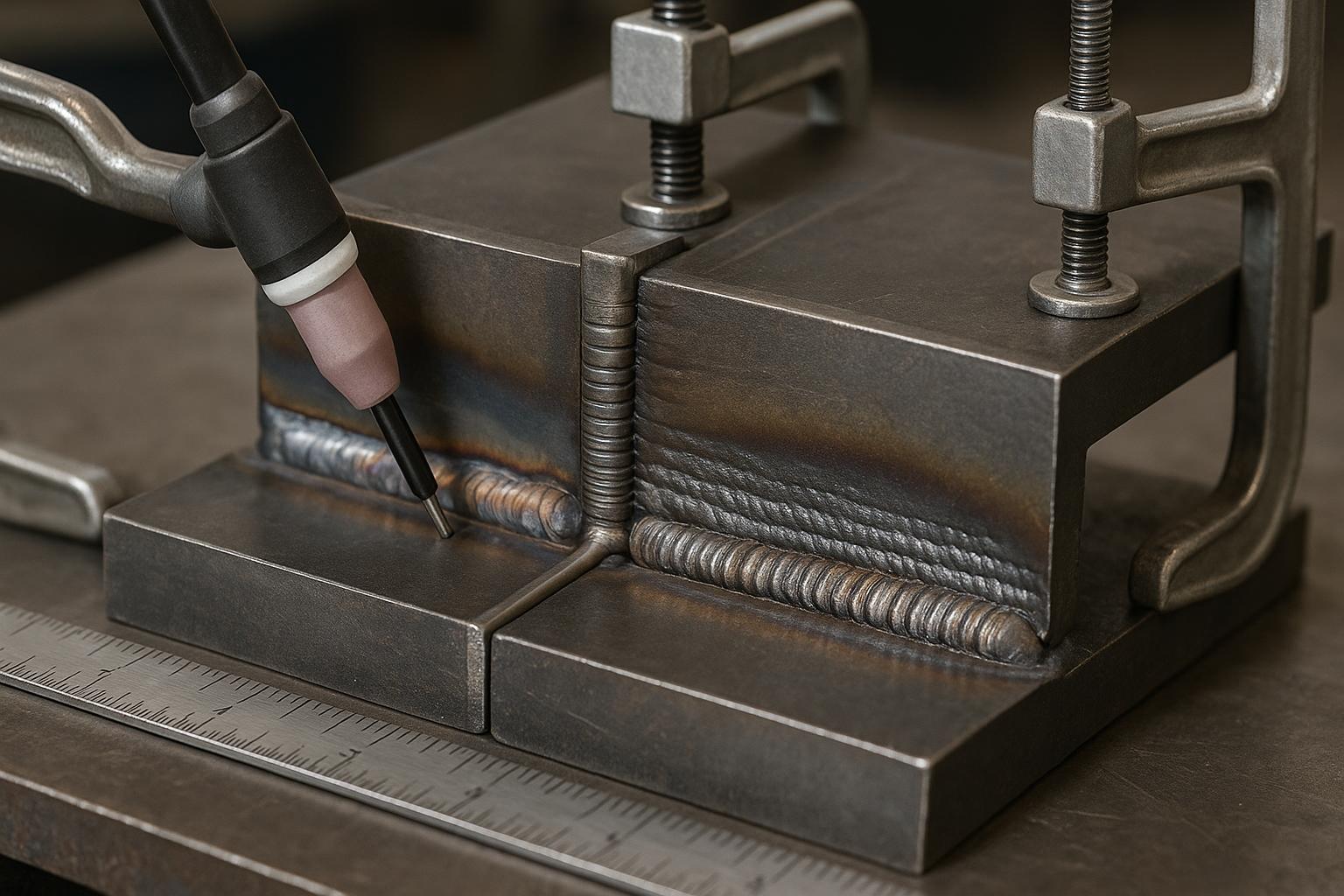
Key steps for a robust hybrid joint include preheating to reduce restraint, ensuring tight fit-up, and controlling interpass temperature. Below is a practical sequence many structural fabricators use:
- Root pass with GTAW: Establish a clean root with deep, precise penetration and minimal distortion.
- First fill pass with GMAW: Use short-arc or spray transfer as appropriate to fill without excessive heat input.
- Second fill pass with FCAW: Add bulk metal quickly when access is limited or when shielding is challenging.
- Defect checks and interpass management: Inspect beads, monitor porosity, and maintain interpass temperatures to minimize cracking.
When working with very thick joints, consider interpass temperature control and preheating strategies. For efficiency improvements in shop-floor workflows, explore lean automation upgrades.
Examples from real-world fabrication show that root-quality control with GTAW, combined with controlled GMAW/FCAW fills, yields reliable, defect-resistant joints even in 1.25–2 inch thick plate. If you’re starting a welding business or looking to scale, planning around hybrid techniques can be a differentiator; see the resources on starting a welding business for guidance.