A Practical Process Playbook
Blending GTAW and FCAW can maximize penetration while controlling heat input on thick-walled joints. This practical guide outlines when to sequence GTAW and FCAW, how to set amperage and travel speeds, and how to train welders to execute reliable multi-process joints.
When to use a GTAW-FCAW hybrid for thick assemblies
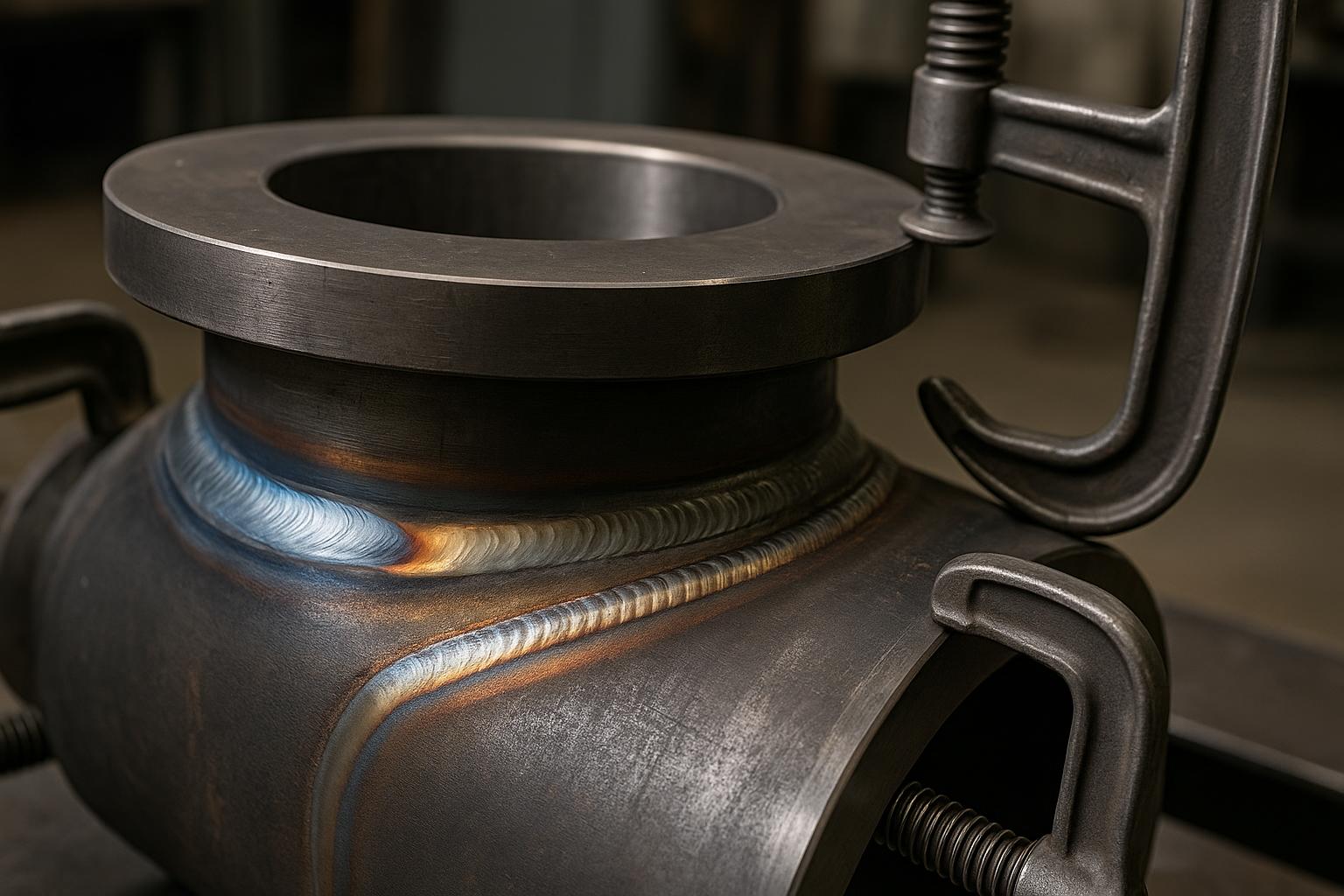
Use GTAW for the root and final cap in critical zones where finish and precision matter, and FCAW for rapid deposition in the fill passes to keep heat input manageable. For thick sections, alternating passes can maintain penetration while avoiding excessive heat buildup. GTAW-GMAW hybrid joints for critical structures offer sequencing and fit-up examples that translate to thick-wall joints.
Recommended sequencing and heat control
Typical sequence:
- Root pass with GTAW for precision and penetration control.
- Fill passes with FCAW to build thickness efficiently while moderating heat input.
- Final cap with GTAW for a clean, smooth surface and reinforcement control.
Key heat-management tips include maintaining steady travel speed, using backstep techniques on FCAW passes, and adjusting amperage in small increments. See our thick-joints guidance for more detail on heat control. Thick-to-Thin Joints covers heat management across joint geometries.
Welder training and qualification
Train welders to switch comfortably between process modes, maintain consistent travel speed, and follow sequencing charts. Start with visual aids and mock-ups, then move to real joints under supervision. For structured study blocks and a phased training path, explore our Hybrid Welding Playbook. Advanced Hybrid Welding Playbook.
Practical example: thick-walled pipe joint
Step-by-step approach tailored for thick-walled pipe: prep, tack, root GTAW, fill FCAW, cap GTAW. Monitor penetration with amperage adjustments and a consistent travel speed. Record sequence and outcomes for future optimization.