Performance Benchmarks for Startups and Certification Labs
Portable battery-powered welders open new possibilities for small shops and AWS/ASME prep labs by offering field-ready capability without extensive power infrastructure. This piece benchmarks the latest portable battery welders on the metrics that matter in the field: run-time, duty cycle, arc stability, and portability.
Run-time is critical when you are working on site away from outlets. Real-world run-time depends on current, material, and battery pack size. For example, at a typical field weld around 150 A, some models deliver 20–40 minutes of continuous output before needing a shift, while lower currents extend that window. Battery chemistry and inverter efficiency are major factors here.
Duty cycle determines how long you can weld before the unit overheats or needs a rest. Many portable units list a reduced duty cycle at higher currents, which translates into practical limits for AWS/ASME prep tests. When evaluating, check whether the rating is specified at 20% vs 100% duty and at what current. A steady duty cycle helps labs keep test times predictable; see Certification Lab Playbook for how to structure tests around equipment limits.
Arc stability matters as you move from bench-top to field conditions. Battery-powered units may struggle with high short-circuit current or windy environments, so look for measures such as stabilized arc, built-in arc force control, and consistent spray versus globular transfer on thinner materials. For labs planning AWS/ASME prep, arc consistency reduces rework and speeds up certification trials. See field benchmarks in our related piece on field-ready battery welders for real-world performance notes.
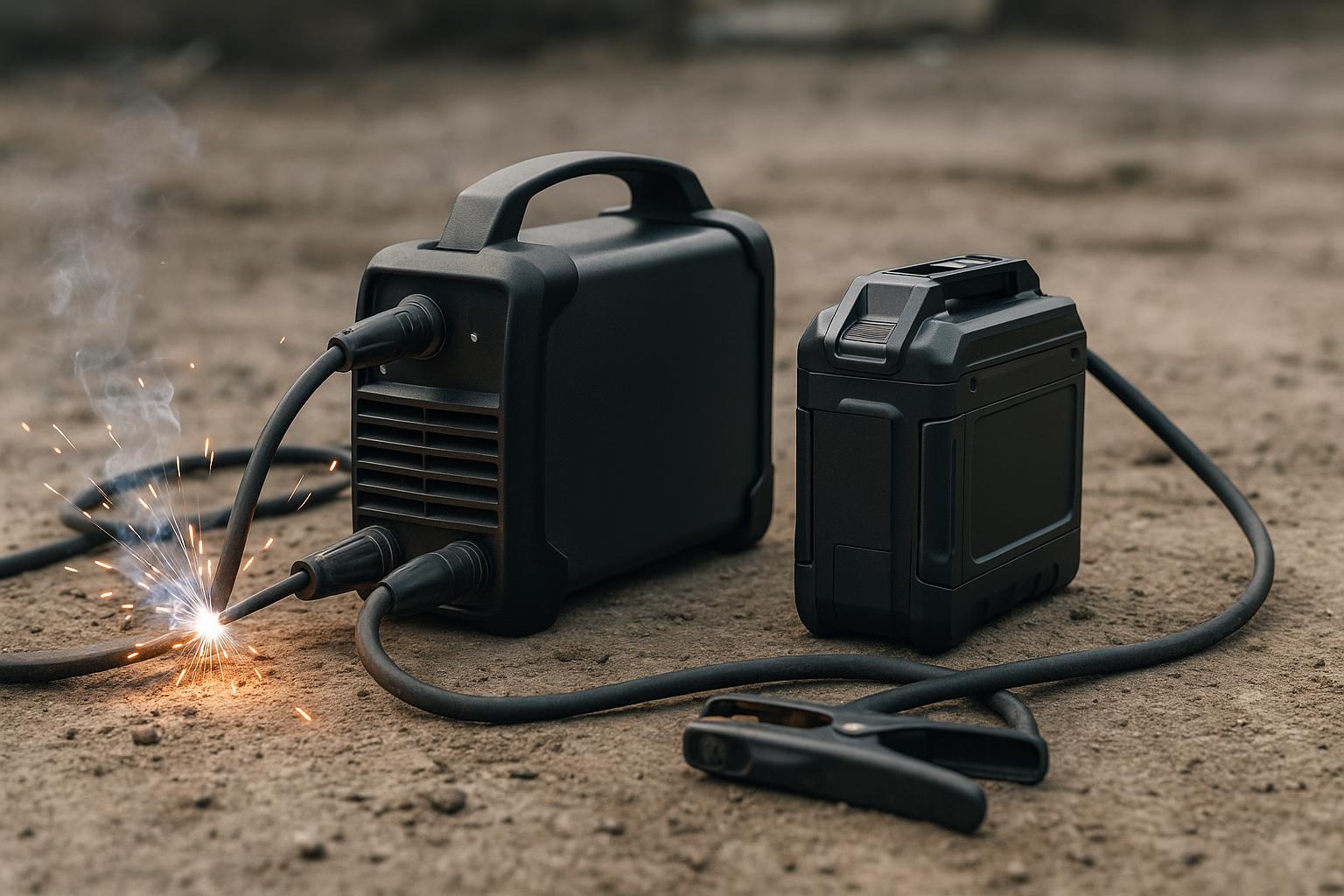
Portability determines how easily the system travels to job sites. Weight, handle design, and integrated battery shape influence how you load out a mini-mobile kit. For startups evaluating on-site capabilities, combining a lightweight welder with a compact, serviceable battery pack expands field options. If you also want to explore compact field power options, check portable hybrid power for field welds.
Practical guidance for choosing gear
Match the device to your typical job mix. If most work is thin sections at low currents, prioritize arc stability and battery capacity. For thicker joints or higher duty tasks, verify that the unit can sustain longer windows with an acceptable duty cycle. Always test with the actual lead lengths and cable setups you’ll use on site to validate run-time and stability.
- Consider a model with clear current control and reliable start-up behavior.
- Check battery diagnostic features to avoid unexpected power drops mid-weld.
- Assess portability vs. runtime trade-offs for your typical on-site workflow.
For labs aiming to optimize certification readiness, integrate these benchmarks into your test plans. The Certification Lab Playbook provides a framework for scheduling tests, recording outcomes, and comparing devices against standards.