Coordinating GTAW, GMAW, and FCAW in Complex Assemblies
Multimaterial joints pose unique challenges: different alloys conduct heat differently, and each thickness responds to heat with varying distortion risk. The goal is to balance heat input so each weld segment achieves sound fusion without warping or cracks.
Heat input basics for multimaterial joints
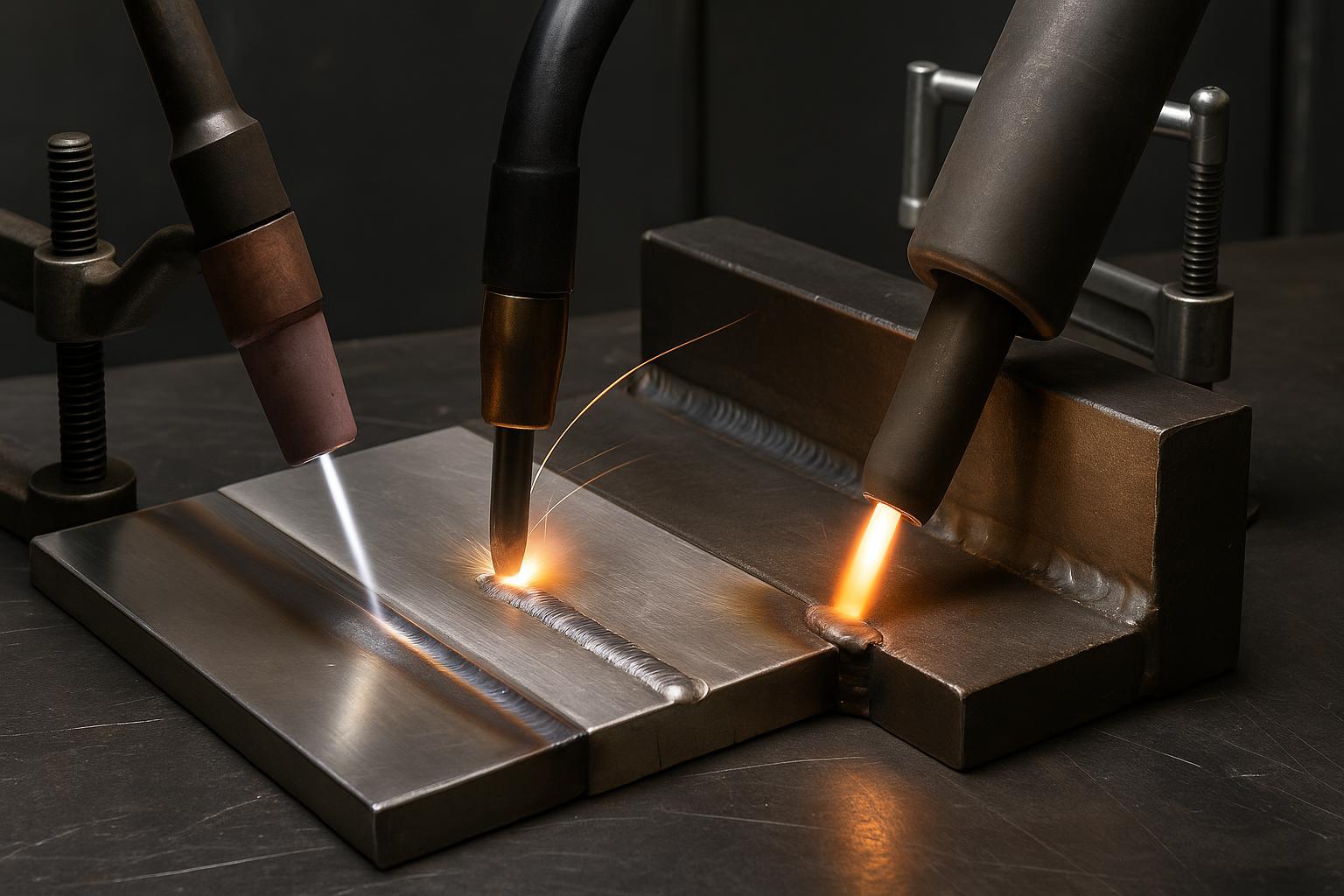
Understand how each process deposits heat and how material pairings react. GTAW provides precision on thin sections or sensitive alloys, while GMAW offers higher deposition rates for fillets, and FCAW can simplify field joints. When joints involve dissimilar metals, review alloy compatibility, interpass temperatures, and heat-affected zone (HAZ) control. A practical rule of thumb is to keep heat per pass low on thin members and plan sweep patterns that minimize thermal buildup.
- MaterialConductivity: High conductivity metals require shorter arc time to avoid heat buildup.
- ThicknessStrategy: Use GTAW on thin areas, GMAW for mid-thickness, FCAW for heavy sections.
- InterpassControl: Maintain consistent interpass temps to prevent microcracking.
Process sequencing for certification and performance
In certification-focused work, sequence choices must satisfy procedure qualification records (PQR) and code requirements while delivering reliable joints in the field. Start with precision passes (GTAW) on critical, thin, or photomonitoring areas, then progress to higher-deposition passes (GMAW or FCAW) for root and fill beads. Always document heat input per pass and compare it to the approved parameters. For a broader discussion of organized testing and process planning, see process-first test plans and thick-to-thin joints as context. For practical fixture and toolkit references, explore our welding toolkit and smart test fixtures articles.