How Portable Power Reshapes Your Startup Strategy
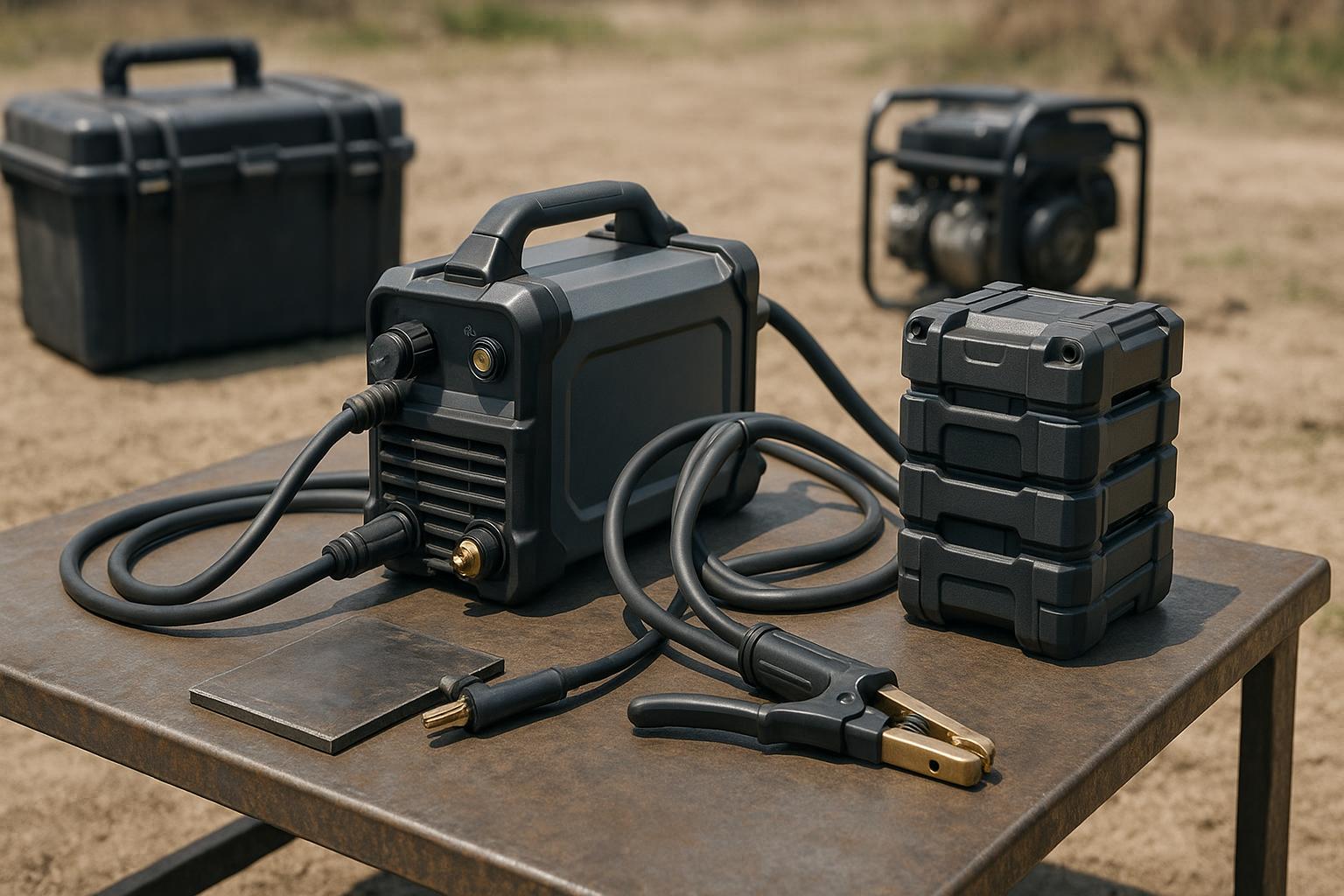
Field-ready, battery-powered welders bring service to the customer rather than forcing a shop visit. With compact packs, you can reach remote jobs, shorten mobilization, and set pricing that reflects true on-site value. This shifts both operations and certification readiness in practical ways.
To see how this looks in practice, consider how field-ready power affects your crew planning and job quotes. field-ready power guidance from our Field-Proof Power review covers how we approach portability and reliability on the road.
Run-time planning for field welders is about turning capacity into predictability. Start by estimating your average arc-on time per joint, the number of joints per day, and the charger/pack efficiency. A typical portable system may run 2–4 hours of welding on a mid-range battery pack with a reasonable duty cycle. Use that as a baseline and adjust for your process (MIG, TIG, or flux-cored) and joint complexity.
For a practical example of how battery size translates to run-time, see our portable battery-powered welders guide. portable battery-powered welders for comparison on pack sizes and weight.
Practical test protocols
When adopting field power, follow a simple test protocol that verifies heat input consistency, run-time, and arc stability under real-work conditions.
- Charge and discharge cycling: verify capacity retention after 50+ cycles.
- Duty-cycle test: run a 25–50% duty cycle for 2–4 hours with typical joints, and inspect welds for penetration and bead quality.
- Charging logistics: confirm fast-charge behavior and field charging options.
- On-site workflow: ensure cable routing, safety checks, and ergonomics fit your field setup.
Common decision criteria to avoid overbuying include aligning runtime with typical job length, ensuring compatibility with existing processes, cost of spare packs, and service support in your region. See our startup planning guidance: startup plan.
Choosing the right system for your startup
Compare battery chemistry (lithium-ion vs solid-state), pack weight, charging options, and safety features. If you’re expanding to on-site service, ensure your kit aligns with market certification expectations and the associated test requirements. For more perspective on hardware options, see our notes on next-gen portable weld equipment.
Bottom line: field-ready battery welders unlock true field capability, but pick a system with clear runtime, reliable charging, and a path to certification readiness in mind. When you size the kit correctly, you can extend your service area, win more bids, and keep certification tests on track.