Look, I’m not gonna sugarcoat this – mobile welding fuel costs are absolutely destroying profit margins right now. Your truck’s drinking gas like it’s got a death wish, and every mile to a job site feels like you’re burning twenties in the exhaust pipe. I’ve been running mobile ops for over a decade, and this fuel situation is the worst I’ve seen.
But here’s the thing – whining about gas prices won’t fix your bank account. Smart welders are adapting, and the ones making real money have figured out systems that work. Let’s dive into the practical stuff that’ll actually put cash back in your pocket.
The Real Cost of Mobile Welding Fuel Costs
First, let’s get real about what fuel is actually costing you. It’s not just the gas – it’s wear and tear, time stuck in traffic, and all the miles you’re not getting paid for. Most mobile welders I know are hemorrhaging money because they’re not tracking this stuff properly.
Your F-250 with a welding rig isn’t exactly a Prius. We’re talking 12-15 MPG on a good day, loaded down with equipment. At current fuel prices, that’s $0.35-$0.50 per mile just in gas. Add maintenance, insurance, and depreciation, and you’re looking at close to $0.75 per mile in real costs.
The brutal truth? If you’re not tracking every mile and building it into your pricing, you’re working for free on the road. Pricing for certification services gets complex, but fuel costs are non-negotiable – they come off the top before you see a dime of profit.
Hidden Fuel Drains Nobody Talks About
Your generator’s burning fuel while you work. That Miller Big Blue 400 Pro? It’s sipping about a gallon per hour at full load. On a 6-hour job, that’s another $4-5 in fuel costs that most guys never factor in.
Then there’s the “just one more stop” mentality. You know what I’m talking about – swinging by the supply house, hitting another quick job on the way back. Those “quick” detours add up to serious money over a month.
Route Planning That Actually Saves Mobile Welding Fuel Costs
This is where most mobile welders lose their shirts. They’re driving around like headless chickens, taking jobs in whatever order they come in. Smart route planning isn’t rocket science, but it does require some discipline.
Start grouping jobs by geographic area. I don’t care if the north side job pays $50 more – if you’ve got three jobs on the south side, that’s where you’re working that day. The fuel savings alone will make up the difference, plus you’re not spending half your day behind the wheel.
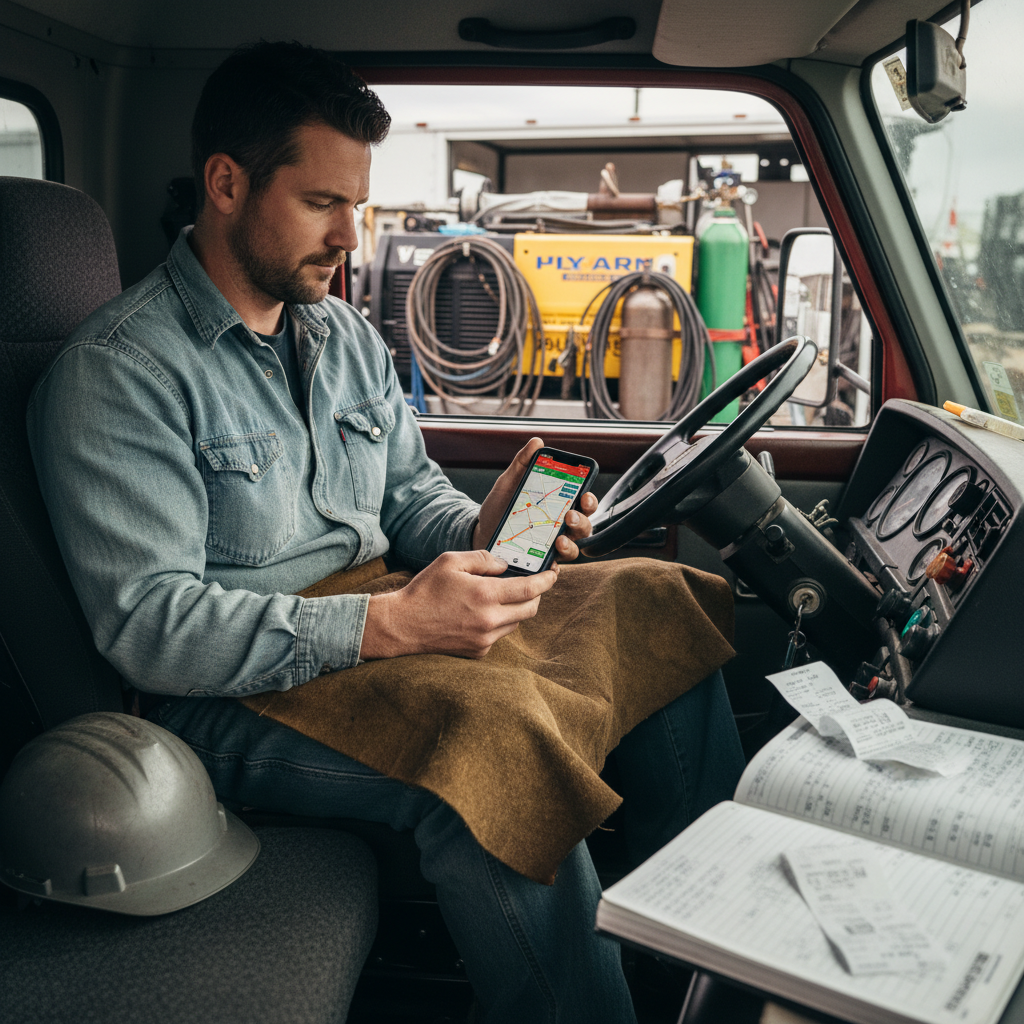
Use Google Maps or Waze for real-time routing, but plan your day the night before. Traffic patterns are predictable – avoid the morning rush when possible, and plan your fuel stops strategically. Smart heat maps for startups can help you identify the most profitable geographic clusters for your business.
The Monday Morning Route Audit
Every Monday, pull up your mileage log from the previous week. Look for patterns – are you driving back and forth across town unnecessarily? Are there customers you should fire because they’re too far from your core service area?
I dropped a regular customer who was 45 minutes outside my normal route. Yeah, it hurt to lose the business, but the fuel and time savings let me take on two closer jobs that netted more money with less headache.
Fuel Tracking Apps That Don’t Suck
Most fuel tracking apps are designed by people who’ve never run a service business. They’re either too complicated or missing the features you actually need. Here’s what works in the real world:
MileIQ – Automatically tracks your drives and lets you categorize them as business or personal. The IRS loves detailed mileage logs, and this thing runs in the background without you thinking about it.
Fuelly – Dead simple fuel economy tracking. Tells you exactly what your rig is costing per mile, and you can spot problems before they get expensive.
QuickBooks Self-Employed – If you’re already using QB, the mobile app does decent mileage tracking and integrates with your expense reports.
The key is picking one system and sticking with it. I don’t care which app you use – consistency beats perfection every time.
Setting Up Automated Tracking
Turn on automatic tracking and forget about it. Trying to remember to log every trip manually is a recipe for incomplete records and missed deductions. Set it up once, let it run, and review weekly.
Pro tip: Take a photo of your odometer reading at the start of each tax year. Makes reconciling your records much easier if the IRS comes knocking.
Billing Strategies That Cover Real Fuel Costs
Here’s where most mobile welders get soft – they’re afraid to charge what the job actually costs. Your customers aren’t stupid. They know fuel isn’t free, and if you’re not building travel costs into your pricing, they’ll assume you’re either desperate or incompetent.
Start with a base service call fee that covers your first 15-20 miles. Beyond that, charge mileage – and don’t be shy about it. $0.75-$1.00 per mile after the base radius is reasonable and defensible.
For regular customers, consider zonal pricing. Group your service area into zones and set flat rates for each zone. Makes quoting easier and eliminates the need to calculate exact mileage every time.
Strategic niches can help you command premium pricing that more than covers increased fuel costs. Specialized work justifies higher rates across the board.
The Fuel Surcharge Conversation
When fuel prices spike, don’t eat the cost. Implement a fuel surcharge and explain it simply: “Due to current fuel costs, there’s a temporary $X surcharge on service calls.” Most customers get it – they’re dealing with the same gas prices you are.
Make the surcharge transparent and tie it to actual fuel price thresholds. When prices drop, drop the surcharge. Being fair builds long-term customer relationships.
Equipment Choices That Reduce Mobile Welding Fuel Costs
Your equipment choices directly impact fuel consumption. That massive 400-amp diesel welder might be impressive, but if you’re doing mostly light fabrication, you’re hauling around unnecessary weight and burning extra fuel.
Field-ready multi-process welders have gotten incredibly capable. A good 200-amp machine handles 80% of mobile welding jobs and weighs half what the big iron does.
Consider hybrid battery-powered welders for lighter work. Battery technology has improved dramatically – you can run all day on battery power for many applications, eliminating generator fuel costs entirely.
The Right Tool for the Job
Match your equipment to your actual workload, not your ego. Yeah, having a 500-amp beast is impressive, but if you’re burning an extra 2 MPG hauling it around to do 1/8″ plate work, you’re throwing money away.
Invest in quality equipment that’s sized appropriately. Field-ready battery welders are game-changers for certain applications and can dramatically reduce your fuel costs on smaller jobs.
Maintenance That Saves Fuel Money
A poorly maintained truck and welder will kill your fuel economy faster than anything else. Fresh air filter, clean fuel injectors, proper tire pressure – basic maintenance pays for itself in fuel savings.
Your welder needs maintenance too. A dirty air filter on your generator will increase fuel consumption. Clean spark plugs, fresh oil, and proper maintenance intervals keep your equipment running efficiently.
Don’t ignore your truck’s maintenance schedule. A truck that’s down for repairs costs you way more than preventive maintenance ever will.
Tire Pressure Reality Check
Check your tire pressure weekly. Under-inflated tires can cost you 2-3 MPG, which adds up to serious money over a year. With the weight you’re carrying, proper tire pressure is critical for both fuel economy and safety.
Consider commercial-grade tires designed for your workload. They cost more upfront but last longer and often provide better fuel economy than cheap replacements.
Customer Education and Expectations
Your customers need to understand that mobile service costs more than shop work – and fuel is a big part of that premium. Don’t apologize for it, explain it. “Mobile service means I come to you, but that convenience includes travel time and fuel costs.”
Set clear expectations about minimum job sizes for distant locations. “For jobs over 30 miles out, there’s a $200 minimum.” Protects you from driving an hour each way to weld a $50 bracket.
Educate customers about scheduling efficiency. “I’ll be in your area Thursday – perfect time to knock out that repair.” Most customers appreciate the heads up and are flexible if it saves them money.
The Value Conversation
Position mobile service as premium convenience, not desperate hustle. You’re saving the customer downtime, transportation costs, and scheduling headaches. That’s worth paying for, and fuel costs are just part of delivering that value.
When customers balk at fuel surcharges, remind them that their delivery drivers, HVAC techs, and plumbers all charge similar fees. It’s standard business practice, not highway robbery.
Technology Solutions for Fuel Management
Fleet cards with detailed reporting help track fuel spending patterns. You can spot unusual consumption, find the cheapest stations on your routes, and get better data for tax reporting.
GPS fleet tracking isn’t just for big companies anymore. Basic systems are affordable and provide detailed data on routes, idle time, and driving habits that affect fuel consumption.
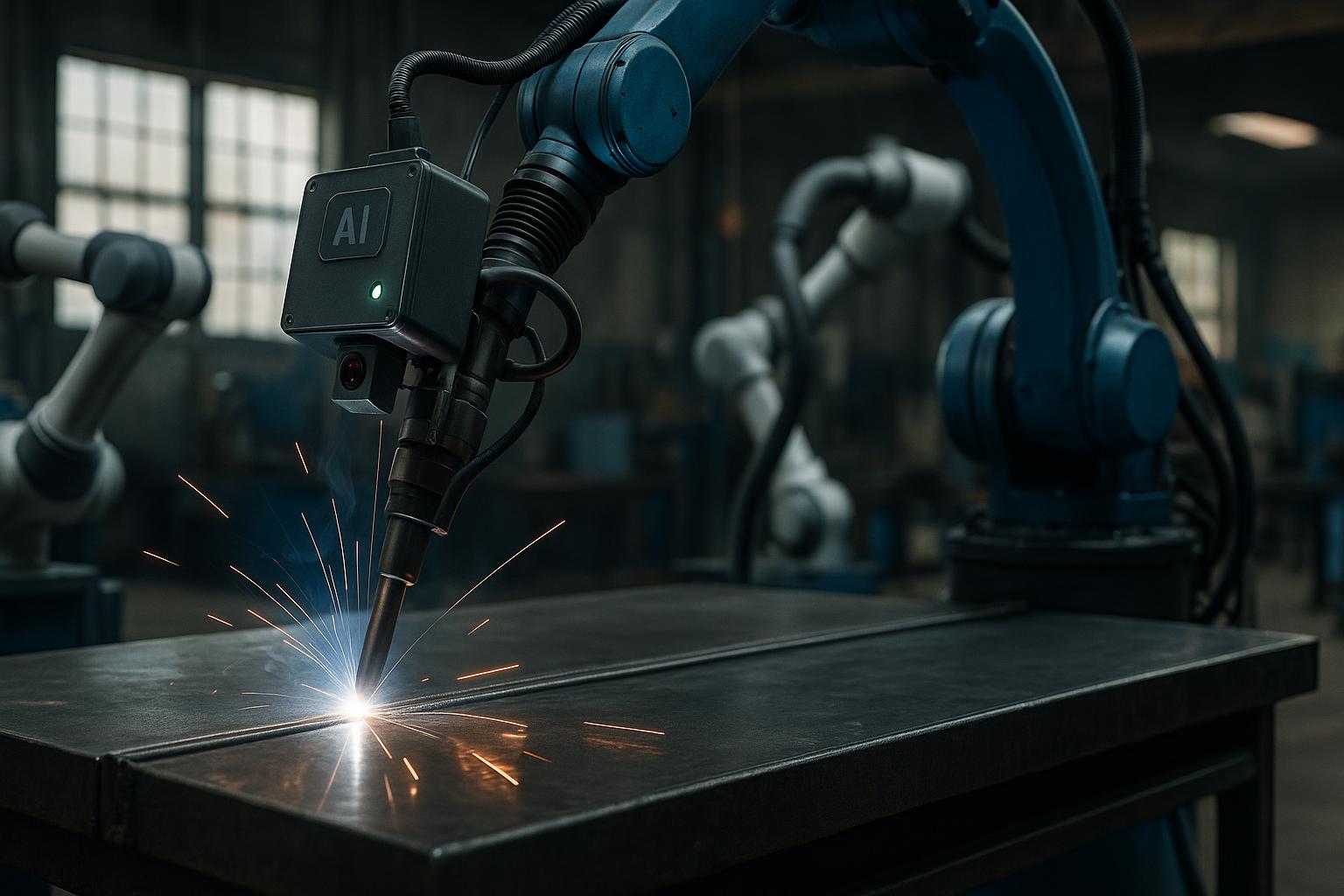
Smart arc monitoring for weld technology can optimize your welding parameters to reduce generator runtime and fuel consumption during actual welding work.
Data-Driven Decisions
Use real data to make equipment and routing decisions. If your tracking shows you’re consistently getting poor fuel economy on certain routes, investigate alternatives or adjust pricing accordingly.
Track the correlation between job profitability and distance. You might find that your most profitable work is closer to home than you think.
Long-Term Strategies for Managing Mobile Welding Fuel Costs
Consider establishing a dedicated service area and sticking to it. Geographic focus reduces fuel costs and lets you build a reputation in specific communities. From garage to shop often starts with defining your core service territory.
Build relationships with other mobile welders for job sharing in distant locations. If you get a call 50 miles north and your buddy works that area, refer the job for a percentage. Better than eating the fuel costs on a marginal job.
Look into hybrid business models – maybe 70% mobile, 30% shop work for customers willing to come to you. Gives you more control over fuel costs while maintaining the mobile premium.
The Exit Strategy
Have a fuel price threshold where certain jobs become unprofitable. Know your numbers well enough to make quick decisions about which jobs to take and which to pass on.
Sometimes the smart play is raising rates until your customer base shrinks to the most profitable core. Better to work less and make more money than run yourself ragged for break-even jobs.
Reality Check: What Actually Works
After ten years of mobile welding, here’s what really moves the needle on fuel costs: ruthless route planning, transparent pricing that reflects real costs, and the discipline to turn down unprofitable work.
The apps and technology help, but they won’t save you if your basic business model is flawed. You need to charge appropriately, work efficiently, and treat fuel as what it is – a major business expense that customers need to cover.
Stop thinking of fuel costs as something to absorb and start thinking of them as something to manage. Track them, bill for them, and make decisions based on real data instead of gut feelings.
Mobile welding can still be profitable despite high fuel costs, but only if you’re smart about how you operate. The welders making good money aren’t the ones with the biggest rigs or the lowest prices – they’re the ones with the best systems.
Your truck will keep burning fuel, and prices aren’t coming down anytime soon. But with proper planning, transparent pricing, and disciplined execution, you can turn fuel costs from a profit killer into just another manageable business expense.
Now quit complaining about gas prices and start implementing systems that actually work. Your bank account will thank you.