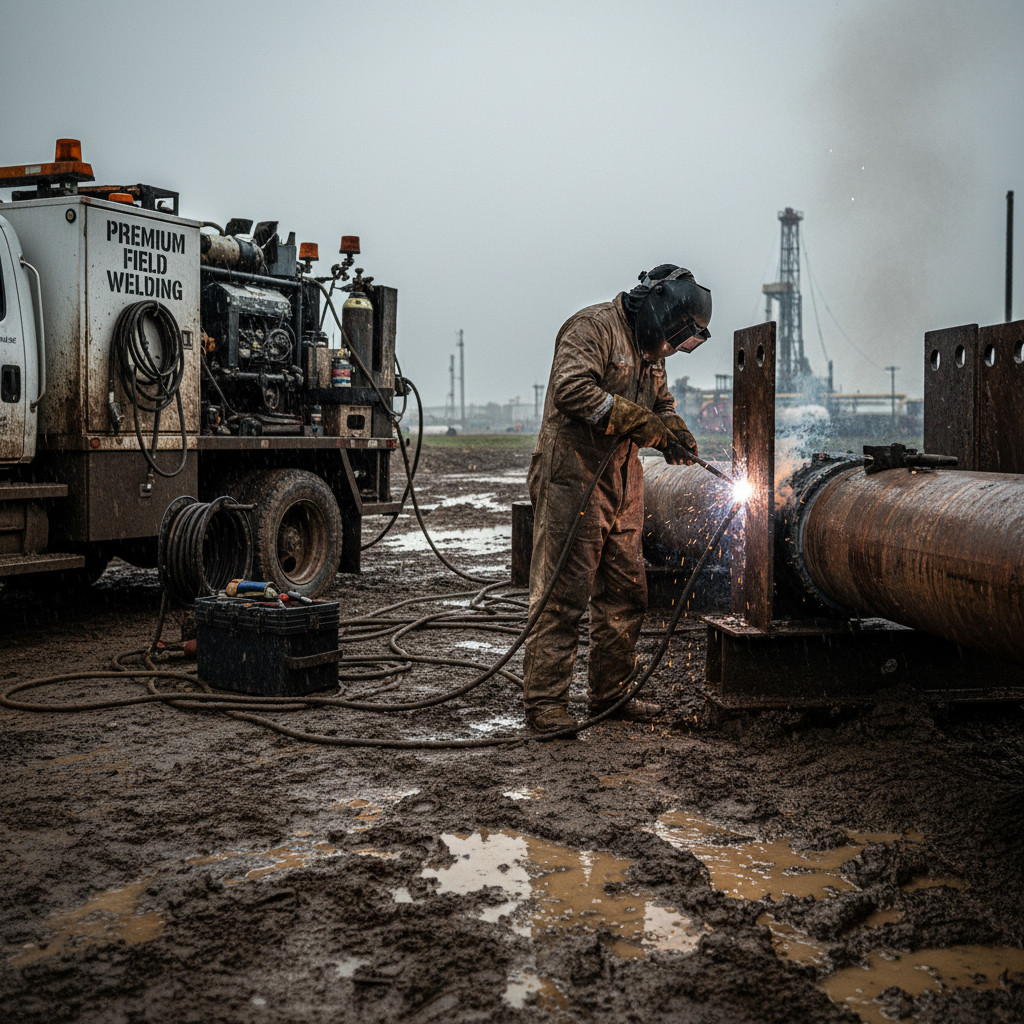
Look, I’ve seen it a thousand times. Guy quotes the same rate whether he’s welding in his comfortable shop or crawling under a combine in December mud with ice forming on his beard. Field welding pricing isn’t the same as shop work, and if you’re treating them equally, you’re basically working charity cases half the time.
Here’s the brutal truth: field work costs you more in every single way imaginable. More wear on equipment, more time, more risk, more everything. Yet most of us price it the same because we’re afraid of losing jobs to the guy who doesn’t know better.
Stop that. Right now.
The Hidden Costs of Field Welding Pricing
When you roll out to a job site, you’re not just bringing your welding skills. You’re hauling a mobile shop, dealing with weather, working in positions that would make a contortionist cry, and doing it all while some supervisor breathes down your neck about downtime costs.
Let’s break down what field work actually costs you:
Equipment wear accelerates exponentially in the field. That field-ready multi-process welder you invested in? It’s taking a beating every single day. Dust, moisture, constant transport – all of it adds up to earlier replacement cycles.
Travel time is money, period. You can’t bill for the hour each way to most job sites, but you sure as hell can’t ignore it exists. Gas, vehicle wear, and the opportunity cost of not being productive – it all counts.
Setup complexity multiplies in the field. In your shop, everything has a place and you know where it is. On site, you’re dealing with limited space, no proper work surfaces, and having to set up everything from scratch every time.
Shop Work: Your Profit Center
Shop work should be your bread and butter for profit margins. You control the environment, you have all your tools exactly where you need them, and you can work efficiently without some foreman asking when you’ll be done every ten minutes.
In the shop, you can batch similar jobs together, use proper fixtures, and maintain consistent quality without fighting the elements. This is where you can be competitive on price because your costs are predictable and controlled.
But here’s where most guys screw up – they use their shop rate as the baseline and then wonder why field jobs eat into their profits. Backwards thinking.
Shop Pricing Structure
Your shop rate should cover your overhead, materials, and a reasonable profit margin. Nothing fancy here – just solid business sense. Calculate your true hourly cost including facility expenses, utilities, equipment depreciation, and insurance.
Factor in efficiency gains from controlled environment work. You can typically complete jobs 20-30% faster in your shop compared to field conditions. Price accordingly.
Field Welding Pricing: The Real Deal
Field welding pricing needs to reflect reality, not wishful thinking. You’re providing a premium service by bringing the shop to them, so charge premium rates.
Start with a minimum trip charge that covers your costs before you even strike an arc. This isn’t negotiable – if they want you on site, they pay for the privilege.
Your field rate should be at minimum 50% higher than shop work, and honestly, that’s probably low for difficult conditions. Working under a piece of equipment in a muddy field in January? Double your shop rate and don’t apologize for it.
Weather premiums are non-negotiable. Rain, snow, excessive heat, wind – all of these slow you down and increase difficulty. Charge extra for each one.
Position premiums matter too. Overhead welding in tight spaces costs more than flat position work. Period. Don’t let anyone tell you different.
The Emergency Premium
Emergency calls are where you can really set yourself apart with smart field welding pricing. Equipment down on a Friday afternoon? That’s premium time. Weekend work? Double premium.
The key is establishing these rates upfront, not trying to negotiate them when someone’s desperate. Have your emergency rate schedule printed and ready to go.
Positioning Your Pricing Strategy
Don’t compete on price alone – that’s a race to the bottom that nobody wins. Instead, emphasize the value you provide through reliability, quality, and availability.
When discussing pricing for certification services, make sure clients understand they’re paying for expertise, not just arc time. Your certifications didn’t come free, and neither should the work that requires them.
Position field work as a premium service. You’re solving their problems on their timeline, in their location, under their conditions. That’s worth premium pricing.
Educating Clients on Value
Most clients don’t understand the difference between shop and field work complexity. It’s your job to educate them, not in a condescending way, but by clearly explaining what goes into each type of job.
Show them the hidden costs – equipment transport, setup time, weather delays, position difficulties. When they understand what you’re dealing with, reasonable people will accept reasonable pricing.
Implementing Tiered Pricing Systems
Create clear pricing tiers that reflect job complexity and conditions. This isn’t rocket science, but it does require some planning.
Tier 1: Shop Work – Base rate, controlled conditions, your turf, your rules.
Tier 2: Standard Field Work – Normal field conditions, reasonable access, standard business hours.
Tier 3: Difficult Field Work – Confined spaces, awkward positions, challenging access.
Tier 4: Emergency/Premium Field Work – After hours, weekends, extreme weather, urgent repairs.
Each tier should have clear criteria so there’s no ambiguity about which applies to a given job.
Equipment Considerations in Pricing
Your hybrid battery-powered welders cost more upfront but can justify premium pricing through convenience and capability. Factor these investments into your field rates.
Specialized equipment for dissimilar-metal welding mastery commands higher rates. Don’t undersell capabilities that took time and money to develop.
Common Pricing Mistakes to Avoid
Biggest mistake? Treating all work the same. Second biggest? Competing solely on price instead of value.
Don’t bid jobs without seeing them first. What looks simple on paper often isn’t in reality. Always inspect the actual work conditions before quoting.
Avoid fixed pricing for field work unless you’ve accounted for every possible variable. Time and materials with caps works better for unpredictable conditions.
Stop giving away your travel time. If you’re driving to them, that’s billable time or at minimum a trip charge. Your truck doesn’t run on good intentions.
The Scope Creep Problem
Field jobs love to grow once you’re on site. “While you’re here, could you also…” is the death of profitable jobs. Build change order procedures into your contracts and stick to them.
Make it clear that additional work beyond the original scope requires separate authorization and pricing. Don’t be the guy who can’t say no to scope creep.
Building Profitable Field Operations
Smart field welding pricing starts with understanding your true costs and building sustainable margins. Track everything – travel time, setup time, material usage, equipment wear.
Use this data to refine your pricing over time. What looks like a good margin on paper might evaporate when you factor in all the hidden costs.
Consider strategic niches that justify premium pricing. Specialized industries often pay better rates for reliable field service.
Develop relationships with clients who value quality and reliability over bottom-dollar pricing. These relationships are worth more than any single job.
Seasonal Adjustments
Winter field work deserves winter pricing. Working in sub-zero temperatures with wind isn’t the same as summer welding. Adjust your rates accordingly.
Busy season pricing should reflect demand. When everyone needs welding done right now, that urgency has value.
The Bottom Line on Field Welding Pricing
Stop leaving money on the table by pricing shop and field work the same. Field welding pricing should reflect the additional complexity, risk, and costs involved in mobile welding operations.
Build pricing structures that make sense for your business, not structures that make you the cheapest option in town. Cheap welders are a dime a dozen – reliable, skilled field welders who show up on time and get the job done right are worth premium rates.
Price your work like the professional service it is, and don’t apologize for charging what your expertise and convenience are worth. The clients who argue about proper pricing aren’t the clients you want anyway.
Your truck, your equipment, your skills, your pricing. Own it.