Look, I’ve seen more mobile shop layouts that look like a tornado hit a welding supply store than I care to count. After fifteen years dragging my gear from job to job, I can tell you that a proper mobile shop layout isn’t just about cramming everything into your truck bed and hoping for the best. It’s about making money, not wasting time digging through piles of crap while your customer’s meter runs.
Most guys think they can just throw their welder in the back, toss some rods in a bucket, and call it good. Wrong. Dead wrong. A smart mobile shop layout means the difference between looking like a pro and looking like a hack who can’t find his own ass with both hands.
Why Your Current Mobile Shop Layout Sucks
Let me guess – you’re one of those guys who spends half his day looking for stuff. Can’t find the right filler rod. Can’t locate your grinder. Your consumables are scattered like confetti at a New Year’s party. Sound familiar?
Here’s the brutal truth: every minute you spend hunting for gear is money walking out the door. Customers don’t want to watch you dig through toolboxes like you’re searching for buried treasure. They want to see a professional who knows where everything is and can get to work.
The biggest mistake I see? No system. Guys just throw everything wherever it fits and wonder why they’re always behind schedule. A proper mobile shop layout follows the same principles as any good fabrication shop – everything has its place, and everything in its place.
The Foundation: Choosing Your Mobile Shop Layout Platform
First things first – what are you hauling this circus in? Your platform determines everything else. Most of us are working with pickup beds, but some guys go full trailer or van. Each has its place.
Pickup beds are the most common, and for good reason. They’re versatile, relatively cheap, and you can still use your truck for normal stuff. But here’s where most guys screw up: they don’t think vertical. Your truck bed isn’t just a flat surface – it’s a three-dimensional workspace.
Vans work great if you’re doing a lot of indoor work where you need to bring everything inside. Trailers give you the most space but limit your mobility. Choose based on your strategic niche, not what looks cool.
Truck Bed Basics
Your truck bed needs to be more than just a cargo area. Think of it as your mobile workspace. First investment should be a good liner – either spray-in or drop-in. Protects your investment and gives you something to bolt into.
Next, you need anchor points. Lots of them. E-track, tie-down points, whatever works for your setup. Everything needs to be secured. Nothing worse than opening your tailgate and watching your favorite grinder bounce down the road.
Zone Planning for Maximum Mobile Shop Layout Efficiency
Now we’re getting to the meat and potatoes. A proper mobile shop layout uses zones. Just like in a real shop, you group related activities together. Makes sense, right?
Zone 1: Power and primary equipment. This is your welder, generator if you need one, and primary power distribution. Should be easily accessible but secured tight. Your field-ready welders need to be where you can get to them fast but protected from the elements.
Zone 2: Consumables and filler metals. This needs to be organized, protected, and easily accessible. We’ll dig deeper into this in a minute because this is where most guys really mess up.
Zone 3: Hand tools and grinding equipment. Frequently used stuff that needs to be grab-and-go. Think about workflow – if you’re always grabbing your grinder after welding, put it close to your welding station.
Zone 4: Safety and cleanup. PPE, first aid, fire extinguisher, cleanup supplies. Often overlooked but absolutely critical. OSHA doesn’t care if you’re mobile.
The Flow Factor
Your zones need to flow together. Don’t make yourself walk back and forth across the bed fifty times per job. Think about your typical workflow and arrange accordingly.
Most jobs follow a pattern: setup, prep, weld, cleanup. Your mobile shop layout should support this flow, not fight it. If you’re constantly backtracking, you’re wasting time and energy.
Consumables Organization in Your Mobile Shop Layout
This is where the wheat separates from the chaff. I’ve seen guys with $50,000 trucks who can’t find a 3/32″ 7018 rod when they need it. Don’t be that guy.
First rule: everything needs a home. Not just “somewhere in that box.” A specific, designated location. Second rule: like with like. All your stainless rods together, all your aluminum wire together, etc.
Rod storage is critical. You need something that keeps them dry, organized, and accessible. Those cheap plastic rod tubes work for light duty, but if you’re serious about this business, invest in proper rod ovens or heated storage. Your pricing structure should account for quality consumables, not bargain-bin junk.
Wire and gas management deserve special attention. Spoolgun setups, wire feeders, gas bottles – all need to be secured and accessible. Gas bottles especially need proper securing. Nobody wants to explain to their insurance company why a bottle of argon took out somebody’s windshield.
The Label System
Here’s a pro tip most guys skip: label everything. And I mean everything. Not just “electrodes” but “7018 1/8″ – 20 lbs” or whatever. When you’re working under pressure, you don’t have time to read fine print on rod packages.
Use a label maker if you have to. Sounds nerdy, but professionalism isn’t about looking cool – it’s about being efficient and reliable.
Power Distribution and Equipment Placement
Your power setup can make or break your mobile operation. Most guys either under-power their setup or create a fire hazard trying to run everything off inadequate systems.
If you’re running off truck power, you need proper inverters and distribution. No cheesy cigarette lighter adapters for anything important. Proper 12V to 110V inverters, properly fused, with adequate wire gauge.
Generator guys have different challenges. Fuel storage and management, noise considerations, ventilation. Your generator needs to be accessible for refueling but positioned where exhaust won’t kill you or your customer.
Battery-powered setups are getting more viable. Hybrid battery-powered welders can handle a surprising amount of work without needing external power. Worth considering if you’re doing a lot of indoor or noise-sensitive work.
Cable Management
Nothing screams amateur like cables everywhere. Your leads, extension cords, air lines – everything needs proper storage and routing. Cable reels, cord wraps, whatever it takes.
Good cable management isn’t just about looking professional. It’s about safety and efficiency. Tangled cables slow you down and create trip hazards. Neither helps your bottom line.
Tool Storage Solutions for Mobile Welders
Your hand tools need to be organized and accessible. Not buried under everything else, not scattered across three different boxes. Organized and accessible.
Toolboxes are the obvious choice, but think about workflow. Do you need everything in one giant box, or is multiple smaller boxes better? Consider frequency of use, weight, and security.
Magnetic tool strips work great for frequently used items. Stick them on your truck bed walls or toolbox sides. Quick access to common tools without digging through drawers.
Don’t forget about cutting tools, measuring equipment, and specialty items. Your plasma cutter, torch set, levels, squares – all need homes in your mobile shop layout.
The Grab Bag Concept
Keep a “grab bag” of essentials that you take to every job site, regardless of the work. Basic tools, safety gear, consumables for quick fixes. Something you can grab and go without thinking.
This bag should contain everything you need for basic repairs or adjustments. Wire brush, file, basic electrodes, safety glasses, gloves. Stuff you’ll kick yourself for not having.
Security and Weather Protection
Your mobile shop represents a significant investment. Protect it accordingly. This means both theft prevention and weather protection.
Locking toolboxes are obvious, but don’t forget about the big stuff. Welders, generators, plasma cutters – anything valuable needs to be secured. Chain and lock, bed covers, whatever it takes.
Weather protection is equally important. Water kills electronics, and temperature extremes affect consumables. Your shielding gas management needs to account for temperature variations.
Tarps, tonneau covers, weatherproof storage containers – invest in proper protection. Replacing rusted or water-damaged equipment costs way more than preventing the problem.
Safety Integration in Mobile Shop Layout
Safety isn’t an afterthought in a proper mobile shop layout – it’s integrated from the start. Fire extinguisher, first aid kit, spill cleanup, ventilation – all need to be planned and positioned properly.
Your fire extinguisher needs to be easily accessible but protected from damage. Mount it where you can reach it quickly, but where it won’t get knocked around during transport.
Ventilation is trickier in mobile setups, but no less important. Fans, positioning, awareness of wind direction – all factor into keeping yourself and others safe.
Don’t forget about arc monitoring and other safety technology. Modern equipment can help you work safer and more efficiently.
Real-World Mobile Shop Layout Examples
Let me share a couple setups that actually work in the real world. Not Instagram-perfect, just functional and profitable.
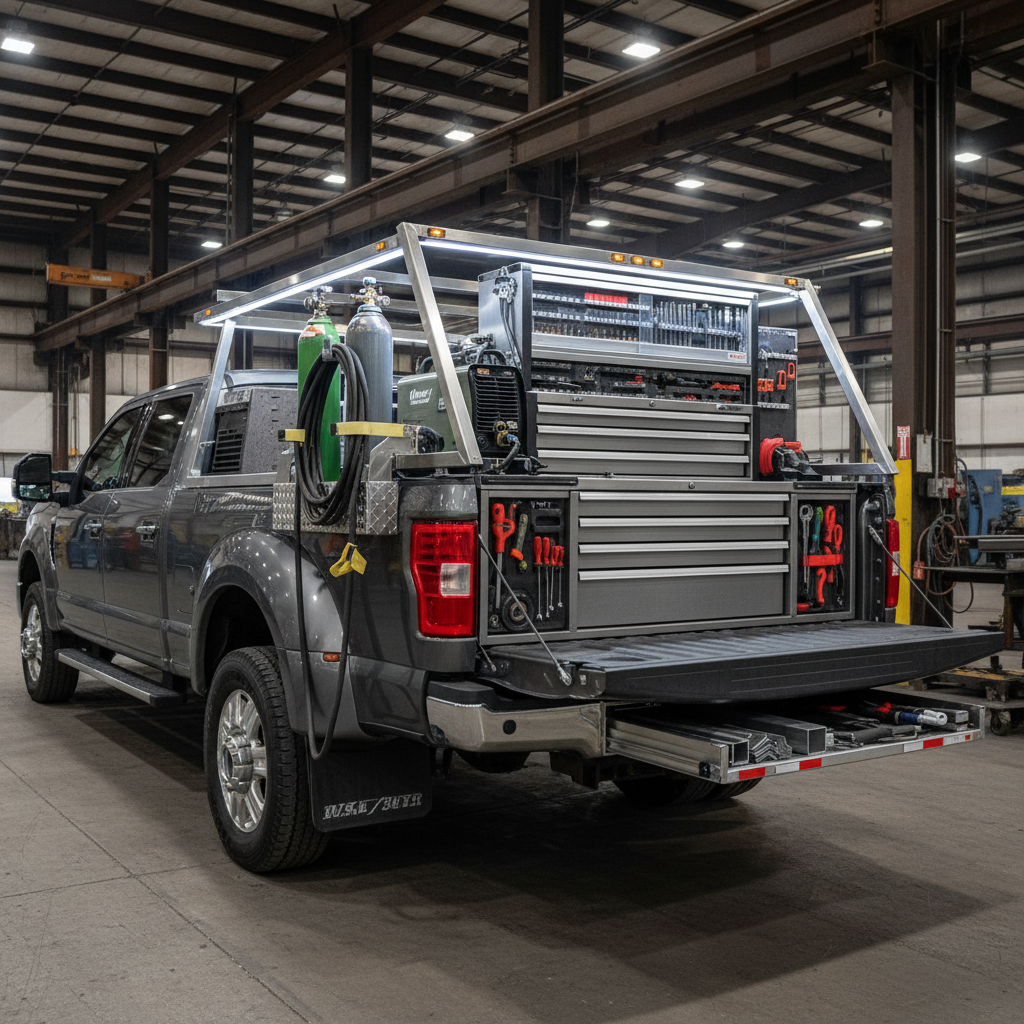
Setup 1: Single-cab pickup with 8-foot bed. Crossover toolbox spans the width, dividing the bed into front and rear sections. Welder and generator in the rear, consumables and tools in the front. Simple, functional, secure.
Setup 2: Crew cab with 6.5-foot bed plus small trailer. Truck carries daily-use items and lighter equipment. Trailer handles the heavy stuff and bulk storage. More complex but handles bigger jobs.
Both setups share common elements: everything has a place, frequently used items are easily accessible, and security is built-in, not added as an afterthought.
Learning from Mistakes
I’ve made every mistake in the book with mobile shop layouts. Learned the hard way that cheap solutions cost more in the long run. That accessibility matters more than maximum storage. That security and weather protection aren’t optional.
Your mobile shop layout will evolve as your business grows. That’s normal. But starting with good principles will save you time, money, and frustration down the road.
Making Your Mobile Shop Layout Work Long-Term
A good mobile shop layout isn’t set-and-forget. It needs maintenance, adjustment, and evolution as your business changes. What works for residential repair might not work when you move into dissimilar-metal welding or specialized fabrication.
Regular evaluation is key. What’s working? What’s not? What’s missing? What’s just taking up space? Be honest about what you actually use versus what you think you might need someday.
Document your setup. Take photos, make lists, whatever helps you remember where everything goes. This helps when you’re reorganizing or when you need to train someone else to work with your setup.
Finally, invest in quality where it matters. Your mobile shop layout is a business tool, not a hobby project. Spend money on things that make you money, save time, or keep you safe. Everything else is just pretty.
Remember, the best mobile shop layout is the one that lets you work efficiently, safely, and profitably. Everything else is just details. Get the basics right, and the rest will fall into place.