When to Mix GTAW, GMAW, and FCAW in Real-World Joints
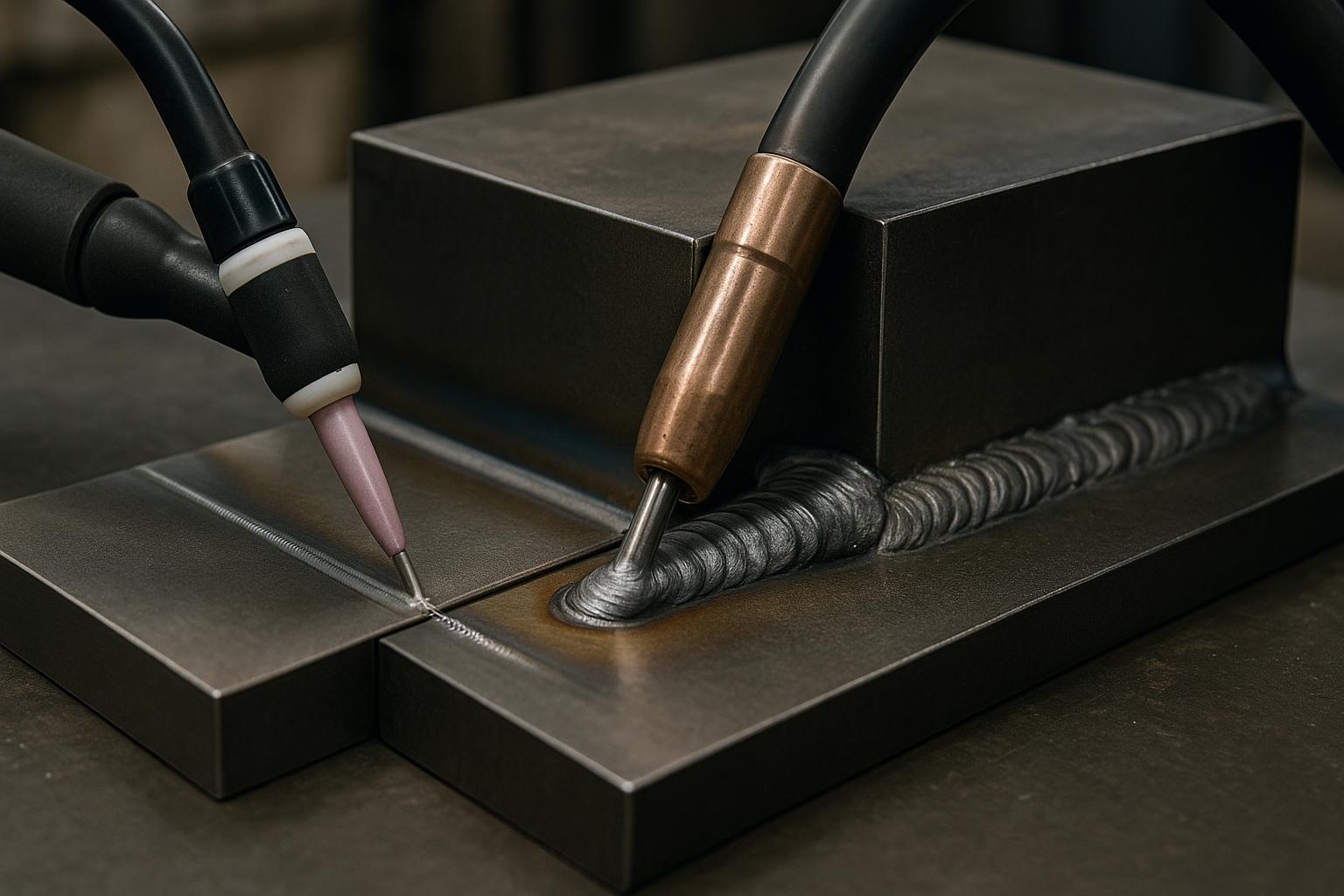
In certified joints, optimizing deposition and quality often means combining welding processes. GTAW (TIG) excels for precision, root passes, and tricky metallurgy but is slower. GMAW (MIG) gives higher deposition rates for fills, while FCAW offers robust performance for thick sections and joint access limitations. The goal is to sequence processes to control heat input, dilution, and metallurgical quality while meeting testing and certification constraints.
Choosing the right combination starts with joint type and thickness. For thin sections, GTAW for the root and carefully planned heat input yields clean penetration with minimal dilution; for thicker sections, a multi-process approach with FCAW root or fill can save time and maintain structural integrity. To see a practical framework for process selection, refer to the process-selection playbook.
Root and fill strategy ideas:
- GTAW root passes provide tight control over penetration and metallurgy, especially on stainless or dissimilar metals.
- GMAW filler passes carry higher deposition rates, making it cost-effective for mid-thickness sections.
- FCAW for heavy fills where access is good and high deposition is needed, with considerations for slag removal and control of slag inclusions.
When to favor each process in common joint configurations:
- Thin plate butt joints: GTAW root + GMAW fill
- Very thick sections: FCAW root or fill with GTAW final tuning
- All-position joints: GTAW where root control matters, FCAW or GMAW for fills depending on position and access
Metallurgy and heat input considerations
Heat input affects the heat-affected zone, dilution, and microstructure. GTAW delivers low heat input for precision, while FCAW and GMAW deliver more deposition per pass but raise HAZ size. Use interpass temperature limits and consider filler metal compatibility to avoid brittle phases or cracking. For certification-day planning and a reminder on process sequencing, see the certification day prep guide and the process-selection playbook.
Test-adapted workflows help you validate the joint in a controlled way before production runs. A typical test sequence might start with GTAW root, switch to GMAW or FCAW for fills, and finish with GTAW/post-weld heat treatment if required by code. If you’re coordinating certification requirements with shop routines, the handoff workflow provides a practical model to align shop practice with exam expectations.
Practical example
Consider a 1.5 inch thick carbon steel T-joint. Start with a GTAW root pass to ensure a clean penetration with minimal dilution. Follow with FCAW fill passes to build up the throat and joint leg quickly. Finish with a light GTAW cap for weld-bead quality and inspection pass. This approach balances precision with productivity while staying within common certification guidelines.