Sequencing GTAW, GMAW, and FCAW for Complex Certification Joints
Multimaterial joints—especially in certification tests—demand a deliberate sequencing approach that respects material properties, thickness, and fit-up. By planning the order of passes across GTAW (TIG), GMAW (MIG), and FCAW, welders can control heat input, minimize distortion, and meet code acceptance criteria on real-world structures.
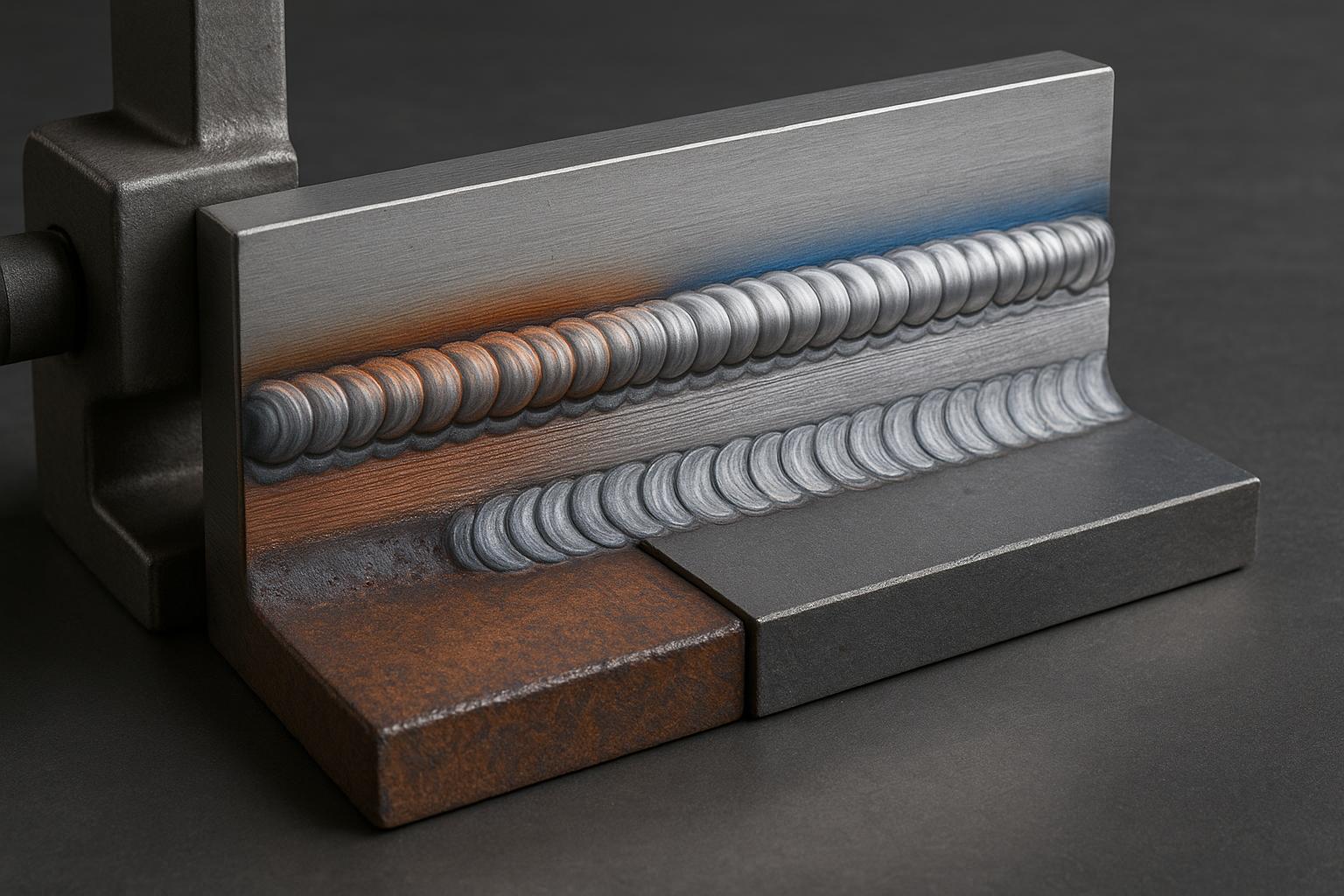
In practice, you start with a strong, low-heat root using GTAW when precision and tight root penetration are required. Then you add progressive fills with GMAW for efficient deposition, and finish with FCAW passes to build up weld metal on thicker sections. This sequence helps balance crack-sensitivity, porosity risk, and filler compatibility across alloys.
As you design a sequence, consider material pairings, thickness ranges, and joint type. For deeper guidance on multimaterial sequencing, see the sequential multimaterial welding guide.
Understanding process strengths and limitations
GTAW provides precise control, clean roots, and minimal heat input, ideal for critical joints in thin sections. GMAW deposits quickly with good fusion, suitable for intermediate thicknesses and larger fills. FCAW offers high deposition rates for thick members, though it can introduce spatter and porosity if not controlled.
Sequencing patterns by material and thickness
- Thin sections (less than 3 mm): start with GTAW root, followed by light GMAW passes.
- Medium thickness (3–6 mm): GTAW root, then a sequence of GMAW fills, finishing with FCAW cap passes.
- Thick sections (above 6 mm): extended FCAW fills after a GTAW or GMAW root to build bulk metal, with careful interpass cooling.
Practical tips for test-day consistency
Use a written weld sequence and fixture setup to minimize heat input, verify preheat and interpass temperatures, and practice mock test cycles to ensure repeatability. For additional guidance on multimaterial heat control, see the multimaterial heat control strategies.
Further reading
In cases of dissimilar alloys, consult established techniques for dissimilar-metal welding mastery to manage filler compatibility and joint geometry.