Designing Your Own Mock Tests to Build Muscle Memory
A repeatable, exam-focused practice regime helps welders build muscle memory and reduce decision time under pressure. In this playbook, you’ll learn how to design structured mock tests that mirror AWS and ASME certification tasks, with staged fixtures, timed runs, and reproducibility benchmarks.
This approach builds a repeatable practice system that can be scaled across a small shop or a larger welding operation, helping craftsmen improve speed and consistency under certification pressure.
Step 1: Define target exams and tasks
Start by listing the core welding joints, positions, and test coupons that commonly appear on AWS D1.1 or ASME certification tests. This helps you design fixtures that reproduce the exact sequences you’ll be tested on. For planning and time-management guidance, refer to the certification test day approach.
Step 2: Build staged fixtures that mimic exam tasks
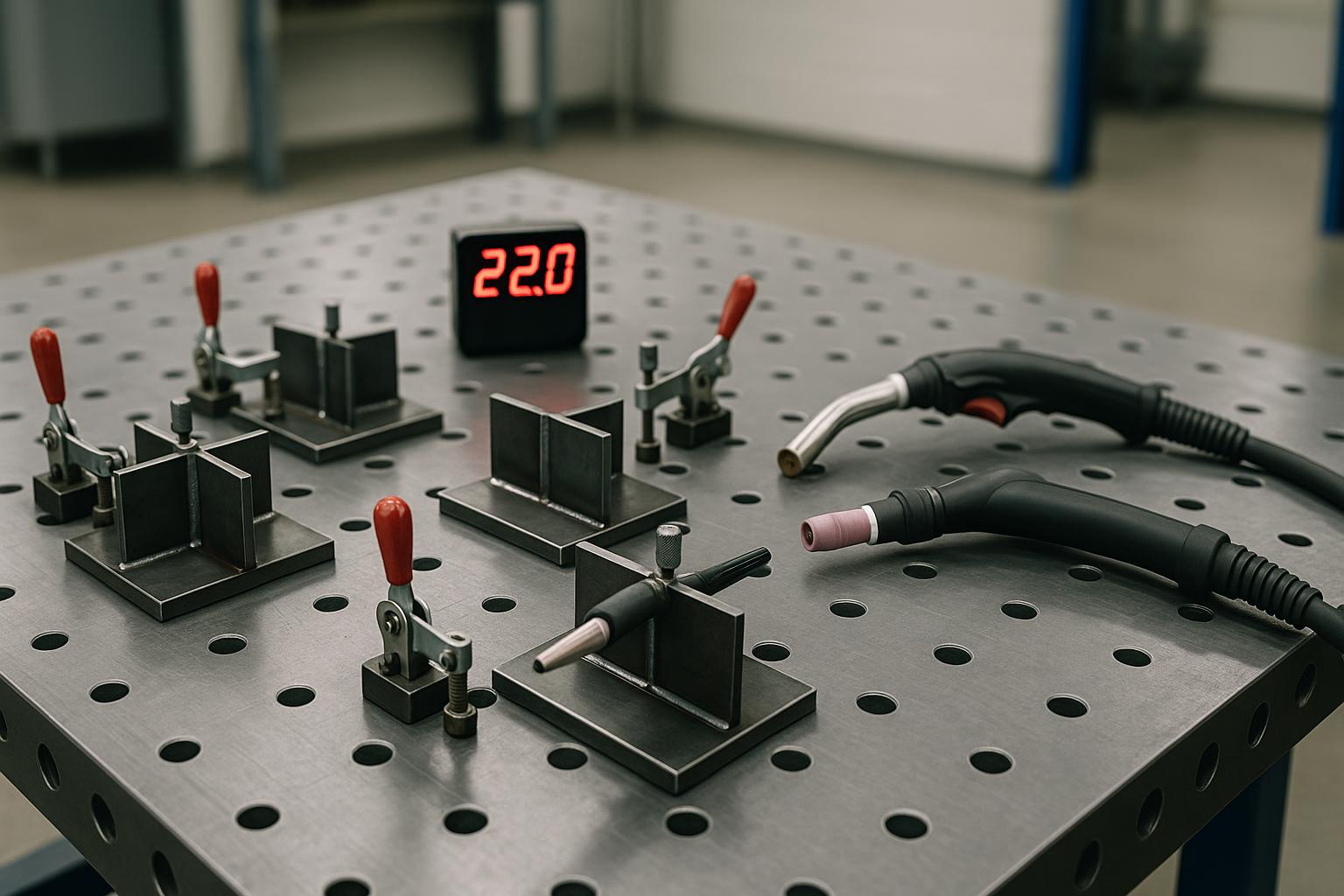
Use a fixture grid and jig arrangements that recreate the standard exam challenges. Start with simple coupons and progress toward multi-pass joints. A well-designed fixture set lets you reconfigure quickly for different tasks and ensures consistent results across runs.
- Fixture A: flat coupon for basic fillet and groove tests
- Fixture B: position changes that simulate typical exam tasks
- Fixture C: multi-pass welds with QA checks and setback planning
For hands-on ideas, review techniques from mock lab trials and adapt them to your shop’s workflow.
Step 3: Establish timed runs and scoring rubrics
Assign a strict time budget for each task and a simple scoring rubric (e.g., bead quality, alignment, crater fill). Timekeeping creates urgency while reproducible scoring yields meaningful progress data. Consider adopting a cadence aligned with certification study blocks to reinforce steady improvement.
Step 4: Track reproducibility and build muscle memory
Capture data on every run: cycle time, pass/fail criteria, and observations. Regularly review a sample of finished coupons against a standardized checklist. The goal is to identify where muscle memory gaps occur and adjust fixture complexity or timing accordingly.
Step 5: Run a repeatable 4–6 week cycle
Plan a structured schedule: daily light practice, two longer weekly runs, and a weekly review. Use the same fixtures, same tasks, and the same scoring system to measure true progress. This disciplined cycle mirrors certification programs and keeps teams focused over time.
If you’re ready to start, adapt the cadence to your shop size and certification goals, and log results to build an evidence-based prep plan that scales.