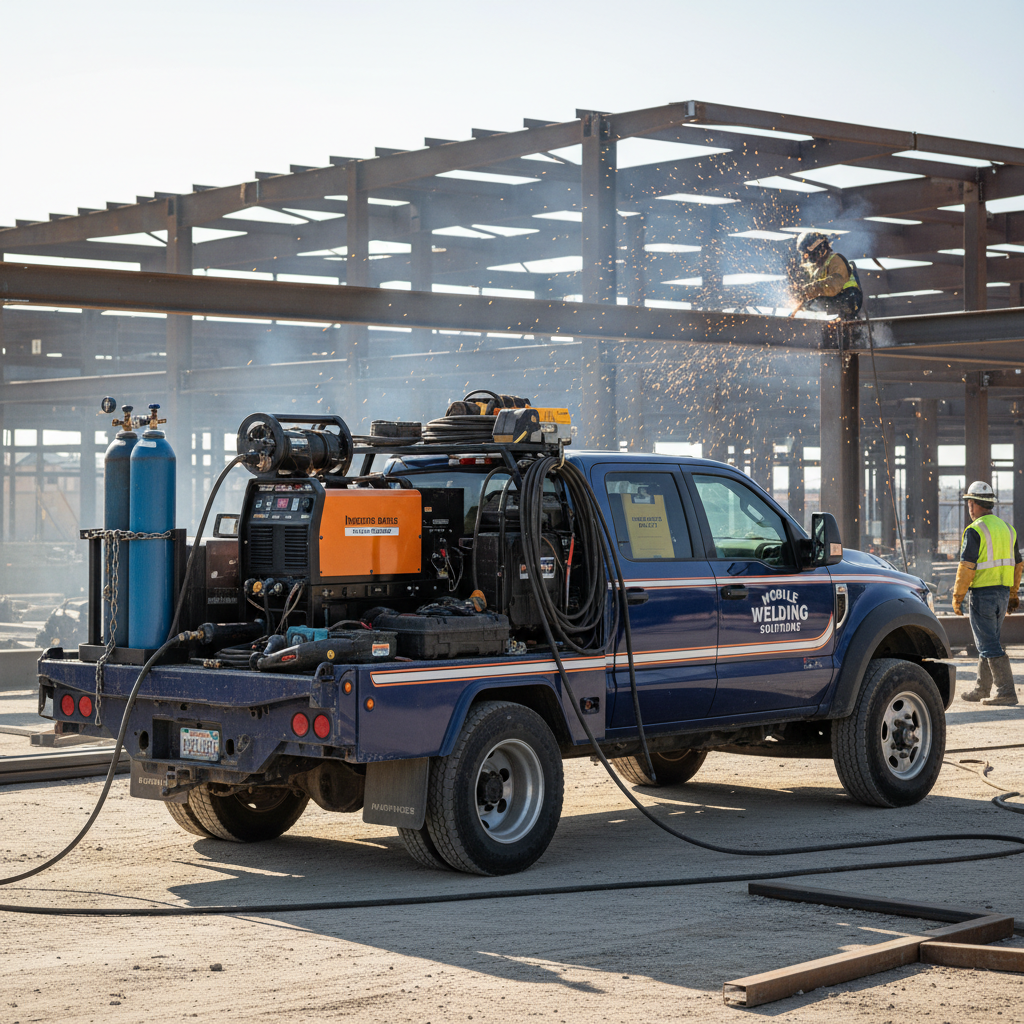
Finding mobile welding insurance that doesn’t treat your rig like a rolling bomb factory is harder than finding a straight piece of angle iron at the hardware store. Most standard business policies see “welding truck” and immediately picture every worst-case scenario from their risk management nightmares.
Here’s the deal: Regular commercial auto insurance won’t cover your equipment when you’re actually using it. General liability might laugh at your claim if sparks caused the damage. And don’t even get me started on those “one size fits all” business packages that cost more than your truck payment.
After ten years of dealing with insurance companies that think we’re all one spark away from burning down half the county, I’ve learned which coverage actually protects mobile welders without assuming we’re running death traps on wheels.
Why Standard Business Insurance Fails Mobile Welders
Standard business insurance was designed for people who work in buildings, not for those of us who turn parking lots into temporary fabrication shops. When you call most agents about mobile welding insurance, they hear “welding” and immediately start calculating worst-case scenarios.
Your commercial auto policy covers your truck when it’s driving. The moment you fire up that welder and start working, you’re in a coverage gap bigger than the space between a apprentice’s beads. Equipment coverage? Only when it’s not being used for its intended purpose.
General liability might cover slip-and-fall accidents, but try explaining why your welding sparked a small grass fire and see how quickly they point to exclusions. Meanwhile, you’re sitting there thinking about how you need coverage that understands the difference between negligence and normal welding operations.
The real kicker is when they quote you based on risk tables designed for fixed-location shops. Suddenly your mobile setup looks like the most dangerous operation since someone decided to weld in a fireworks factory.
Essential Mobile Welding Insurance Coverage Types
Let’s break down what coverage actually matters when your office has wheels and your workspace changes daily. Not all of these are mandatory, but skipping the wrong one will cost you more than the premium ever would have.
Inland Marine Coverage for Equipment
This isn’t about boats, despite the name. Inland marine covers your welding equipment while it’s being transported and used at job sites. It’s the difference between having a $15,000 paperweight and getting back to work after equipment failure or theft.
Most policies cover theft, but read the fine print about “mysterious disappearance.” Some won’t pay if you can’t prove forced entry, which is problematic when your welder walks away from an open job site.
Professional Liability Insurance
Professional liability covers you when your work doesn’t meet specifications or causes downstream problems. That perfectly good weld that fails because the engineer spec’d the wrong rod? You need coverage for the legal headaches that follow.
This coverage becomes critical when you’re doing multimaterial welding or working on structural projects where failure means more than just redoing a joint.
Completed Operations Coverage
Your work doesn’t stop being your problem when you pack up and leave. Completed operations coverage protects you from claims arising from your finished work. That handrail you installed last month? If someone claims it failed and caused injury, this coverage handles the defense costs.
The statute of limitations on construction claims can stretch for years. Without completed operations coverage, you’re personally liable for problems that surface long after you’ve moved on to other projects.
Finding Insurance Companies That Get Mobile Welding
Not all insurance companies understand mobile welding operations. Some see “portable welding equipment” and immediately assume you’re a fire hazard with wheels. Others get it and price their policies accordingly.
Look for insurers who specialize in contractor insurance or have specific programs for mobile welders. They understand the difference between welding in a controlled shop environment and adapting to field conditions. They also understand that your field-ready equipment is designed for mobile operations.
Progressive, State Farm Commercial, and several specialty insurers offer programs designed for mobile welders. They understand that your equipment is designed to travel and that proper safety procedures minimize risk.
Avoid companies that want to classify you as “general contractors” or “automotive repair.” These classifications come with inappropriate risk assumptions and pricing that doesn’t reflect mobile welding operations.
Questions to Ask Potential Insurers
Before you sign anything, ask these specific questions. If the agent can’t answer them clearly, find someone who specializes in contractor insurance:
Does the policy cover equipment while it’s being used at job sites? Some policies only cover equipment in transit or storage, leaving you unprotected during actual operations.
How are claims handled for work-related property damage? You need to know if accidental slag damage to client property is covered or if you’re paying out of pocket.
What’s the process for adding new equipment or vehicles? As your business grows, you need coverage that can adapt without requiring complete policy rewrites.
Cost-Saving Strategies for Mobile Welding Insurance
Insurance costs money, but there are legitimate ways to reduce premiums without sacrificing coverage. Some of these strategies might surprise you because they actually improve your operations while cutting costs.
Safety Training and Certifications
Insurance companies love documented safety training. Completing OSHA 10-hour courses, AWS safety seminars, or manufacturer-specific training can qualify you for premium discounts. It’s not just box-checking either – proper training reduces claims.
Keep your certifications current and document continuing education. Many insurers offer additional discounts for welders who maintain current certifications and participate in ongoing training programs.
Equipment Maintenance Documentation
Insurers prefer clients who maintain their equipment properly. Keep maintenance logs for your welders, generators, and safety equipment. Regular maintenance reduces equipment failure claims and demonstrates professional operations management.
This documentation becomes critical during claims processing. Insurers are more likely to approve claims when they can see you maintained equipment according to manufacturer specifications.
Higher Deductibles and Smart Coverage Limits
Higher deductibles significantly reduce premiums, but choose deductibles you can actually afford to pay. A $2,500 deductible that saves $1,200 annually makes sense if you can handle the out-of-pocket expense during a claim.
Set coverage limits that match your actual replacement costs, not inflated retail prices. Your five-year-old welder isn’t worth what you paid new, but it needs enough coverage to buy equivalent used equipment.
Common Insurance Mistakes Mobile Welders Make
I’ve seen good welders make expensive insurance mistakes that could have been avoided with basic understanding of policy language and coverage gaps. Learn from their expensive lessons.
The biggest mistake is assuming your personal auto policy covers business use. The moment you use your personal truck for welding jobs, you’re operating outside policy terms. When that accident happens, you’ll discover your personal coverage doesn’t apply to commercial activities.
Another common error is underinsuring equipment. That $3,000 welder might not sound expensive compared to other business assets, but replacing it plus your entire mobile setup adds up quickly. Don’t forget consumables, safety equipment, and tools when calculating coverage needs.
Many welders also skip umbrella liability coverage because it seems expensive. But when you’re working on projects where failure could result in property damage or injury, the extra coverage costs less than one significant claim would.
Reading Policy Exclusions
Policy exclusions matter more than coverage descriptions. Exclusions tell you exactly what situations leave you unprotected. Common exclusions that hurt mobile welders include work performed below ground level, operations near flammable materials, and modifications to existing structures.
Pay attention to geographical restrictions too. Some policies exclude coverage outside certain states or beyond specific distances from your home base. This matters when you’re chasing work or considering expanding your service area.
Specialized Coverage for Growing Operations
As your mobile welding business grows beyond solo operations, your insurance needs change. What worked for a single-truck operation doesn’t scale to multiple employees or specialized services.
Workers’ compensation becomes mandatory once you hire employees, even part-time help. The classification codes for welders result in higher premiums than general labor, but proper safety programs and experience modifications can reduce costs over time.
If you’re expanding into specialized work like dissimilar-metal welding or strategic niches, make sure your professional liability coverage includes these services. Some policies exclude specialized welding processes or require additional endorsements.
Multi-Location and Multi-State Operations
Operating across state lines complicates insurance requirements. Some states require specific coverage minimums or additional endorsements for out-of-state contractors. Others have unique lien laws that affect how claims are processed.
Multi-state operations also affect workers’ compensation requirements. Each state has different rules about coverage for employees working temporarily in their jurisdiction. Getting this wrong can result in fines and uninsured exposure.
Technology and Modern Mobile Welding Insurance
Modern technology is changing how insurance companies assess and price mobile welding risks. Telematics systems in vehicles can demonstrate safe driving habits and potentially reduce premiums. GPS tracking helps with theft recovery and proves equipment location during claims.
Some insurers now offer usage-based pricing for equipment coverage. If your expensive battery-powered welders spend most of their time in secure storage, you might qualify for reduced premiums based on actual usage patterns.
Digital documentation tools also help during claims processing. Photos, GPS coordinates, and time stamps from mobile devices create clear records of job site conditions and work performed. This documentation can speed claim resolution and support your version of events.
Future Trends in Mobile Welding Coverage
The insurance industry is slowly adapting to modern mobile welding operations. Expect to see more specialized programs for mobile welders as insurers recognize the differences between fixed-location shops and mobile operations.
Pay-per-use insurance models might become available for specialized equipment or occasional operations. Instead of carrying year-round coverage for equipment used seasonally, you could potentially activate coverage only when needed.
Making Insurance Work for Your Business
Mobile welding insurance shouldn’t be an afterthought or a necessary evil. Proper coverage protects your investment, enables growth, and provides peace of mind that lets you focus on welding instead of worrying about worst-case scenarios.
The key is finding insurers who understand mobile operations and pricing policies based on actual risk rather than assumptions about welding hazards. When you find the right coverage at reasonable prices, insurance becomes a business tool rather than just an expense.
Remember that insurance requirements change as your business evolves. What worked when you started with a garage-based operation won’t necessarily meet the needs of a growing mobile welding business with multiple trucks and employees.
Don’t wait until you need coverage to start shopping. The best time to buy insurance is before you need it, when you can compare options and negotiate terms without pressure from immediate coverage needs.
Take time to understand your policies, document your operations properly, and maintain relationships with agents who specialize in contractor insurance. Good insurance isn’t just about paying claims – it’s about having partners who understand your business and help you manage risk effectively.
Your mobile rig represents significant investment in equipment, time, and expertise. Protecting that investment with appropriate insurance isn’t just smart business – it’s essential for long-term success in mobile welding operations.