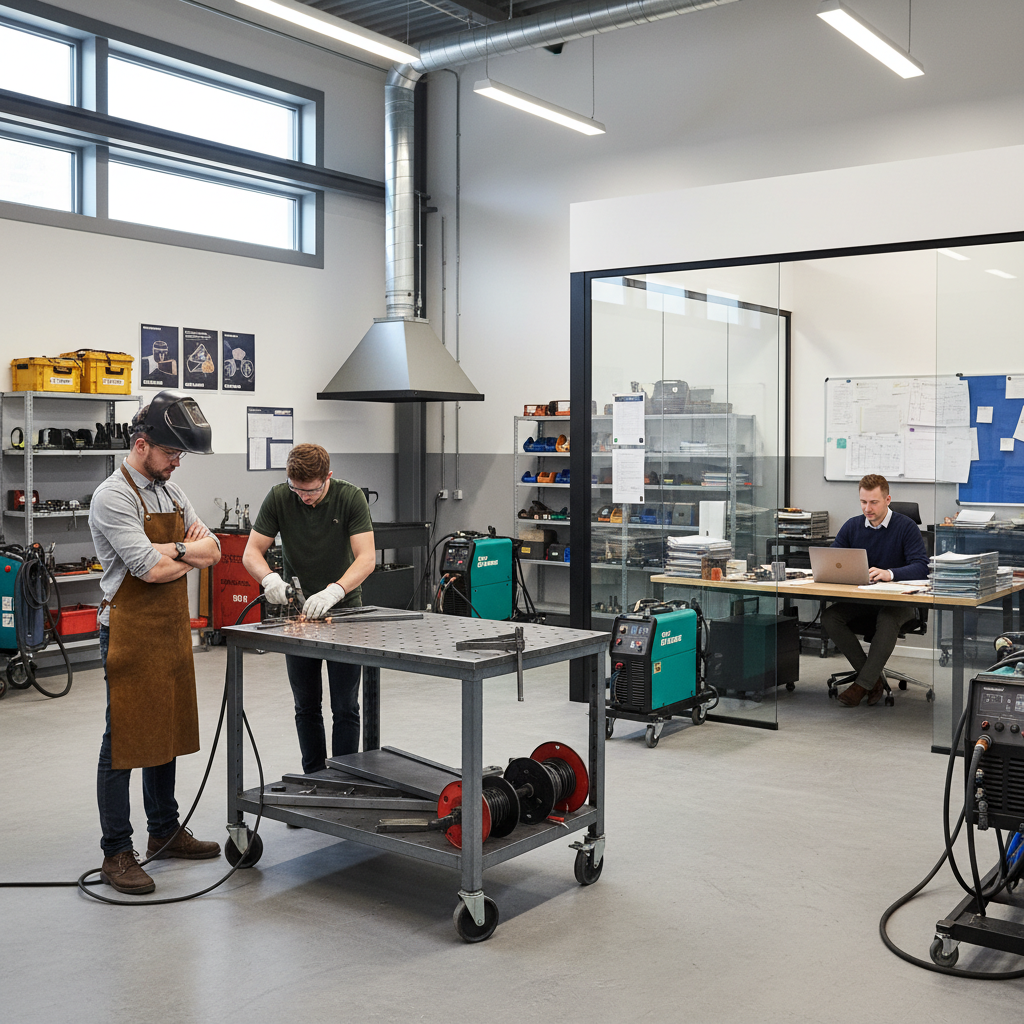
Look, I get it. You’ve been grinding for years, building your welding business from nothing. Every job, every quote, every late-night repair-you’ve handled it all. But here’s the hard truth about scaling beyond solo operations: if you’re still doing everything yourself, you’re not running a business, you’re running an expensive hobby.
The moment you realize you can’t weld, estimate, schedule, and manage finances without losing sleep or quality is when smart shop owners make the leap. Let’s cut through the BS and talk about when to stop being a one-man show and what to delegate first without losing your shirt.
The Warning Signs You’re Hitting the Solo Wall
You know you’ve hit the wall when these scenarios sound familiar. First warning sign: you’re turning down good work because there aren’t enough hours in the day. Second red flag: quality starts slipping because you’re rushing between tasks. Third strike: you haven’t taken a real day off in months.
Here’s what really happens when you try to do everything. Your overhead costs stay artificially low, but your earning potential caps out hard. You can only bill for the hours you personally work, and there are only 24 of those in a day.
Most welders hit this ceiling around $150K-200K annually. After that, every extra dollar requires working longer hours or charging premium rates that price you out of regular work. Neither option is sustainable long-term.
Revenue Plateau Reality Check
The math doesn’t lie. If you’re billing $75-100 per hour and working 50-60 hour weeks, you’re maxed out. Sure, you might push to $125/hour for specialty work, but those jobs are limited. Meanwhile, your competitors who’ve scaled from garage to shop are bidding lower because they have systems in place.
This is where most solo welders get stuck in no-man’s land. Too big to be truly mobile and competitive, too small to handle the jobs that pay real money.
What Scaling Beyond Solo Actually Means
Scaling beyond solo doesn’t mean hiring a crew tomorrow. It means systematically removing yourself from tasks that don’t require your specific expertise. The goal isn’t to work less-it’s to work on higher-value activities.
Think about it this way: every hour you spend on paperwork, scheduling, or running errands is an hour you’re not billing at welder rates. If you can pay someone $20/hour to handle admin work while you bill out at $85/hour, that’s a $65/hour profit margin right there.
The key is understanding which tasks actually need your skills and which ones just need to get done. Most shop owners are terrible at this distinction because they’ve been doing everything for so long.
The Three Phases of Smart Delegation
Phase one involves administrative tasks that eat time but don’t require welding knowledge. Phase two covers customer-facing work like basic quoting and scheduling. Phase three tackles technical support that doesn’t require your certification level.
Each phase has different risk levels and financial requirements. Start with phase one, prove the concept works, then gradually move up the chain. This approach minimizes risk while building your delegation skills.
Administrative Tasks: Your First Delegation Target
Administrative work is where you should start scaling beyond solo operations. It’s low-risk, clearly defined, and doesn’t require industry expertise. Plus, good admin support immediately improves your professional image.
Start with basic bookkeeping, appointment scheduling, and phone answering. These tasks have clear procedures and measurable outcomes. You can train someone to handle them in a week or two.
The ROI here is immediate. If you’re spending 10 hours per week on admin work, that’s 520 hours annually. At $80/hour billing rate, you’re giving up $41,600 in potential revenue to save maybe $15,000 in admin costs.
Setting Up Systems Before Hiring
Before you delegate anything, document your processes. Write down how you handle quotes, schedule jobs, and manage customer communications. This isn’t busy work-it’s insurance against chaos when you’re not around.
Use simple tools like shared calendars, basic CRM systems, or even just organized file folders. The goal is creating repeatable processes that don’t require your constant input or decision-making.
Too many welders skip this step and wonder why their first hire didn’t work out. You can’t delegate what you haven’t systematized first.
Customer Service and Basic Quoting
Once admin tasks are handled, customer service becomes your next delegation target. This includes initial customer contact, basic project discussions, and follow-up communications. It’s more complex than admin work but still doesn’t require technical welding knowledge.
The trick is training someone to handle routine inquiries while knowing when to escalate complex technical questions. Most customer service issues are scheduling conflicts, payment questions, or basic project status updates.
For pricing certification services and standard work, you can create templates and guidelines that non-technical staff can follow. Save your time for the custom quotes that actually need engineering judgment.
Building Customer Service Scripts
Develop scripts for common scenarios: new project inquiries, scheduling changes, payment discussions, and complaint resolution. These aren’t robot responses-they’re frameworks that ensure consistent, professional communication.
Include escalation triggers in every script. When customers ask about dissimilar-metal welding or complex structural work, that goes straight to you. But questions about scheduling, basic pricing, or project timelines can be handled by trained staff.
The goal is filtering your customer interactions so you only handle the conversations that actually need your expertise.
Technical Support Without Certification Requirements
This is where delegation gets interesting but riskier. You can train non-certified helpers to handle material prep, basic setup tasks, and cleanup work. The key word is “basic”-anything requiring welding certification stays with you.
Think material cutting, grinding prep work, fixture setup for repetitive jobs, and workspace organization. These tasks support your welding work but don’t require the same skill level or liability coverage.
A good helper can increase your billable efficiency by 20-30%. While they’re prepping the next job, you’re finishing the current one. It’s like having an extra set of hands that doesn’t need to know how to handle adaptive multimaterial welding.
Training Helpers for Maximum Impact
Focus helper training on tasks that directly support your welding work. Teach them your material organization system, how you like fixtures set up, and your quality standards for prep work.
The investment in training pays off quickly. A helper who knows your systems can set up jobs while you’re finishing others, dramatically improving your daily throughput without compromising quality.
Just remember: helpers support your work, they don’t replace your skills. Keep the welding, certification work, and final quality control in your hands.
Maintaining Quality Control While Delegating
Here’s where most welders screw up delegation: they either micromanage everything or completely hands-off and hope for the best. Both approaches kill efficiency and quality.
The smart approach involves clear standards, regular check-ins, and measurable outcomes. Define what “done right” looks like for each delegated task, then create simple ways to verify it’s happening.
For admin work, this might be weekly reviews of scheduled jobs and customer communications. For helper work, it’s spot-checking prep quality and setup accuracy. The key is catching problems early, not after they’ve affected customer work.
Building Feedback Loops
Create regular feedback sessions with anyone you delegate to. Weekly is usually enough for experienced help, daily might be necessary during initial training. Focus on what’s working well and what needs adjustment.
Remember, delegation failures usually stem from unclear expectations, not incompetent people. If someone consistently misses your standards, first check if your instructions were clear and complete.
Good delegation requires teaching skills you probably learned through trial and error. Take time to explain not just what to do, but why it matters and how it affects the overall job quality.
Financial Planning for Your First Hires
Let’s talk numbers because delegation costs money upfront. Plan for at least 3-6 months of wages before new hires become profitable. This includes training time, initial mistakes, and the learning curve period.
Administrative help typically costs $15-25/hour depending on your location and requirements. A shop helper might run $18-30/hour plus basic benefits. Customer service with some technical knowledge commands $20-35/hour.
The ROI calculation is straightforward: if delegation frees up billable hours that earn more than the delegation costs, it’s profitable. But factor in training time, management overhead, and the occasional mistake that costs money.
Starting Small and Scaling Smart
Don’t try to hire for everything at once. Start with part-time admin help or a helper for your busiest days. Prove the concept works before committing to full-time positions.
Many successful shop owners start by outsourcing specific tasks rather than hiring employees. Bookkeeping services, answering services, or part-time contractors can test delegation concepts without payroll commitments.
As your comfort and systems improve, you can bring more tasks in-house or expand existing roles. This gradual approach reduces financial risk while building your management skills.
Technology Tools That Support Delegation
The right technology makes delegation easier and safer. Basic CRM systems help track customer interactions, project management tools keep jobs organized, and communication platforms ensure nothing falls through cracks.
You don’t need expensive software-simple tools work fine. Shared Google calendars, basic invoicing software, and group messaging apps handle most small shop needs. The goal is coordination, not complexity.
For welders working on field-ready projects, cloud-based systems ensure everyone stays updated regardless of location. This becomes crucial when you’re delegating scheduling and customer communications.
Avoiding Technology Overload
Too many tools create more problems than they solve. Choose simple, reliable systems that do one thing well rather than complex platforms that try to do everything.
Focus on tools that improve communication and reduce errors. Everything else is secondary to those core needs.
Remember, your team needs to actually use these tools for them to work. Complicated systems that require extensive training often get abandoned when things get busy.
When Delegation Goes Wrong: Common Mistakes
Most delegation failures happen because shop owners either delegate too much too fast or choose the wrong tasks to delegate first. High-stakes, customer-facing work isn’t where you start learning delegation skills.
Another common mistake is inadequate training followed by frustrated micromanagement. If you don’t invest time in proper training, you’ll spend more time fixing problems than you would have doing the work yourself.
The biggest killer is unclear expectations. If you can’t clearly explain what success looks like for a delegated task, don’t delegate it yet. Spend time documenting and systematizing first.
Recovery Strategies for Failed Delegation
When delegation doesn’t work, step back and analyze what went wrong. Was it unclear instructions, inadequate training, wrong person for the task, or unrealistic expectations?
Most problems can be fixed with better systems and communication. Complete delegation failures usually indicate rushing the process or skipping foundational steps.
Don’t let one bad experience kill your scaling plans. Learn from what didn’t work, adjust your approach, and try again with better preparation.
Building Your Exit Strategy
The ultimate goal of scaling beyond solo operations isn’t just growing bigger-it’s building a business that can run without your constant presence. This means creating systems, training people, and developing processes that don’t require your daily input.
Start thinking about this from day one of delegation. Every system you create, every person you train, every process you document should contribute to business independence, not just immediate efficiency gains.
This mindset shift changes how you approach delegation decisions. Instead of asking “Can someone else do this?” start asking “How can I build systems so this gets done consistently without me?”
Whether you plan to sell your business, bring in partners, or just want more personal freedom, systematic delegation is your path forward. The alternative is staying trapped in a job you created for yourself.
The bottom line: scaling beyond solo isn’t about working less immediately. It’s about building capacity for growth, improving service quality, and creating a business that’s worth more than just your personal labor. Start small, move deliberately, and keep your eye on the bigger picture.