Look, we’ve all been there. You roll up to a job site power issues nightmare where the electrical situation is more screwed up than a soup sandwich. Your trusty generator that’s never let you down suddenly can’t handle the load, voltage is dropping like a rock, and the foreman’s breathing down your neck about schedule. This is when job site power issues separate the weekend warriors from the guys who actually make money welding.
Here’s the thing nobody wants to talk about: most welders show up with one generator and pray it works. When it doesn’t, they pack up and go home while you’re still there making money. That’s the difference between being busy and being profitable.
Why Your Generator Setup Fails When Job Site Power Issues Hit
First off, let’s get real about why your generator isn’t cutting it. Most guys buy a generator based on their welder’s nameplate rating and call it good. That’s like buying a truck based on how much it weighs empty.
Your welder might say it needs 200 amps, but that’s at perfect voltage under perfect conditions. When you’re dealing with long extension cords, voltage drop, and a generator that’s already working hard, that 200-amp machine might be pulling 250 amps just to maintain arc stability.
Then there’s the dirty power problem. Cheap generators put out power that makes your welder’s inverter work overtime. All those electronic components inside modern welders hate dirty power like cats hate water. Your machine starts throwing error codes, the arc gets erratic, and suddenly you’re troubleshooting instead of welding.
Phase issues are another headache. Three-phase equipment on single-phase power through a converter? Good luck with that setup when the going gets tough. The converter might work fine in your shop, but add heat, humidity, and job site conditions, and it starts acting like a temperamental teenager.
Voltage Drop: The Silent Productivity Killer
Voltage drop will eat your lunch if you don’t plan for it. For every 100 feet of extension cord, you’re losing voltage. Start with 240 volts at the generator, run 200 feet of 12-gauge cord (which most guys use because it’s cheap), and you might have 210 volts at your machine.
Your welder tries to compensate by drawing more current. More current means more heat in the cords. More heat means more resistance. More resistance means even more voltage drop. It’s a death spiral that ends with blown breakers and frustrated welders.
The solution isn’t rocket science, but it costs money upfront. Bigger wire, shorter runs, or higher generator output voltage. Most guys won’t spend the extra money on 10-gauge or 8-gauge cords until they’ve lost money on a job because their setup couldn’t perform.
Smart contractors plan for 10% voltage drop and size everything accordingly. They might pay more for equipment, but they don’t lose money when the power situation isn’t perfect.
Backup Power Solutions That Actually Work
When your main generator setup fails, you need options. Not prayers, not excuses – actual backup solutions that keep you working while other guys are calling it a day.
Multiple smaller generators beat one big one for reliability. If you’ve got two 5kW generators instead of one 10kW unit, you can still work if one breaks down. Parallel them when you need full power, run one when you don’t. It’s like having spare tools – insurance against murphy’s law.
Portable battery welders are game-changers for situations where generators can’t work or aren’t practical. Check out our post on hybrid battery-powered welders for the latest options that actually make sense for professional work. These aren’t toy welders – they’re legitimate backup options for critical repairs.
Power conditioners and isolation transformers can save your bacon when the site power is available but garbage. They clean up dirty power, provide isolation from ground faults, and can help with voltage regulation. Not cheap, but cheaper than blown inverters or failed jobs.
The Real-World Backup Strategy
Here’s what actually works in the field: redundancy and flexibility. Your backup plan should assume your primary power source will fail at the worst possible moment. Because it will.
Primary: Main generator sized for 125% of your maximum load
Secondary: Smaller backup generator that can handle essential equipment
Tertiary: Battery welder for emergency repairs
Support: Power quality equipment and proper cording
This might seem like overkill until you’re the only welder still working when everyone else has packed up because of power problems. That’s when you make the money that pays for all this backup equipment.
Phase Problems and Professional Solutions
Three-phase power on job sites is like finding a unicorn – theoretically possible but don’t count on it. Most industrial welders need three-phase power, but most job sites only have single-phase available.
Phase converters work, but they’re not magic. Rotary converters give you true three-phase power but they’re heavy, expensive, and need maintenance. Static converters are cheaper but don’t handle varying loads well. Electronic converters work great until they don’t, and when they fail, they fail spectacularly.
The professional approach is planning your equipment purchases around single-phase power from day one. Modern field-ready multi-process welders are available in single-phase configurations that perform just as well as their three-phase cousins.
If you absolutely need three-phase equipment, size your converter for 150% of the nameplate rating and have a backup plan. Because when that converter fails (not if, when), you need options other than going home.
Job Site Power Issues: Prevention Beats Reaction
The best power problems are the ones you prevent. Site surveys aren’t glamorous, but they save your bacon when you’re trying to deliver work on schedule.
Call ahead and ask specific questions about power availability. Not “do you have power” but “what voltage, what amperage, how many circuits, and where are the panels?” Get specifics because general contractors lie about electrical infrastructure like politicians lie about everything.
Pack for the worst-case scenario. Bring more capacity than you think you need, more cords than seem reasonable, and backup options for when your primary plan fails. Your truck might look like a mobile electrical contractor, but it beats explaining to the foreman why you can’t work.
Document everything. When power problems delay your work, that’s a legitimate change order. But you need documentation to prove the site conditions weren’t as specified. Photos of inadequate panels, voltage readings, and written communication about power issues protect your profit margins.
Building Your Power Problem Toolkit
Smart welders invest in tools that solve common power problems before they become job-stopping issues. This isn’t about having the coolest gear – it’s about having solutions that keep you productive when others can’t work.
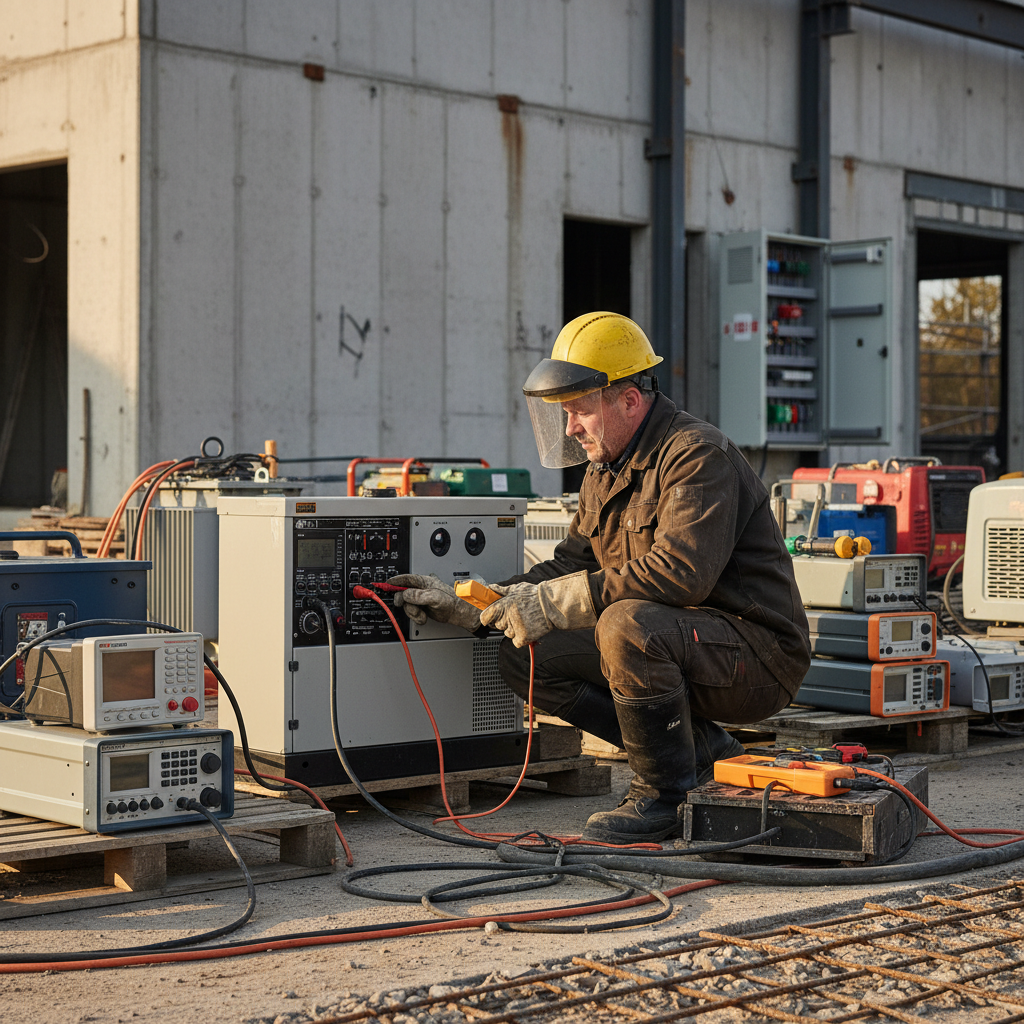
A good digital multimeter is worth its weight in gold. Not the Harbor Freight special, but a real meter that gives accurate readings under load. You need to know what voltage you’re actually getting, not what the generator nameplate says you should be getting.
Clamp-on ammeter lets you measure actual current draw without breaking connections. When your welder starts acting weird, you need to know if it’s drawing normal current or if something’s wrong with the power supply.
Power quality analyzer goes beyond basic measurements to show you harmonics, power factor, and other issues that can cause problems with modern electronic welders. Expensive, but essential if you’re serious about troubleshooting power issues professionally.
When to Walk Away from Bad Power Situations
Sometimes the power situation is so bad that trying to work is throwing good money after bad. Recognizing when to walk away saves you from damaging equipment or producing substandard work that comes back to haunt you.
If you’re getting less than 200 volts at your machine consistently, don’t try to push through. Your welder will overheat, your work quality will suffer, and you might damage expensive equipment trying to make it work.
Frequency problems are another red flag. If the site generator is putting out 55 Hz or 65 Hz instead of 60 Hz, your equipment isn’t designed for that. Motors run at wrong speeds, inverters get confused, and nothing works right.
Ground fault issues can be dangerous and job-stopping. If your GFCI breakers keep tripping or you’re getting shocked through your equipment, there’s a serious electrical problem that needs professional attention before you can work safely.
Remember, your reputation is worth more than any single job. Better to reschedule than to deliver substandard work because you tried to push through impossible power conditions. Understanding pricing for certification services and other premium work helps you focus on jobs that are worth your time and expertise.
The Economics of Power Problem Solutions
All this backup equipment costs money upfront, but it pays for itself when you can work while others can’t. Think of it as insurance against lost productivity rather than just equipment purchases.
A $5,000 backup generator setup might seem expensive until you calculate what you lose when you can’t work for half a day because of power problems. If you bill $150/hour and lose four hours, that generator just paid for a third of itself on one job.
The real money is in being the welder who can handle difficult situations. When other contractors recommend you because you always figure out how to get the work done, you can charge premium rates. Check out our post on strategic niches to see how problem-solving capability becomes a competitive advantage.
Quality power equipment also protects your primary welding equipment. One blown inverter from dirty power can cost more than a good power conditioner. It’s cheaper to prevent problems than fix them after the damage is done.
Job Site Power Issues: Building Your Reputation
In this business, word travels fast about who can deliver and who makes excuses. Being known as the welder who shows up prepared for power problems opens doors to better jobs and repeat customers.
General contractors remember the welders who solve problems rather than complain about conditions. When they’re planning difficult jobs, they call the guys they know can handle whatever gets thrown at them.
This reputation lets you charge more because you’re providing value beyond just welding. You’re providing reliability and problem-solving capability that keeps projects moving forward.
The investment in power problem solutions pays dividends throughout your career. Not just in immediate productivity, but in the jobs you get access to and the rates you can charge because customers know you’ll get the work done regardless of conditions.
Job site power issues don’t have to shut you down if you plan ahead and invest in the right solutions. While other welders are explaining why they can’t work, you’ll be welding and making money. That’s what separates the professionals from the hobbyists in this trade.