The Job That Almost Broke Me (And Why I Walk Every Site Now)
Let me tell you about the Tuesday that almost ended my business. New client, decent-sized repair job on a structural frame inside a processing plant. Sounded simple. I quoted it over the phone based on photos the guy texted me. Photos he took on a phone with a cracked lens in what I can only describe as “optimistic lighting.”
I showed up with my rig, my helper, and a full day’s worth of confidence. What I found was a confined space with a 24-inch access hatch, no available power within 300 feet, and a floor covered in standing water. The “structural frame” was also packed with active hydraulic lines nobody mentioned.
I didn’t lose the job. But I lost half my margin, all of my good mood, and about four years off my life expectancy. That was my last phone-quote job. Every single project now gets a welding site survey before I put a number on paper. No exceptions. Not for old clients, not for easy jobs, not for anything.
If you’re running a mobile welding operation and you’re still quoting from photos and vibes, this post is for you. Grab coffee. Let’s fix that habit before it fixes you.
What a Welding Site Survey Actually Is
A welding site survey is not a formality. It’s not something you do to look professional. It is the single most important business decision you make on any given job, and it happens before you ever strike an arc.
In plain terms, it’s a structured walk of the worksite where you assess everything that could affect how you do the work, how long it takes, what it costs you, and whether you can even do it safely. Access, power, ventilation, material conditions, site hazards, and scheduling restrictions all get evaluated before your quote goes out.
Some guys call it a site walk. Some call it a pre-job assessment. I call it the difference between a profitable day and a very expensive education.
The goal is simple: no surprises on job day. Surprises on job day are margin killers. They blow timelines, spike material costs, and sometimes create safety situations you never should have been in. A proper welding site survey neutralizes all of that before it starts.
Why Most Mobile Welders Skip It (And Why That’s Dumb)
I get it. Site walks take time. Fuel costs money. The client is already a little annoyed that you didn’t just give them a price on the spot. And honestly, for a lot of jobs, it feels like overkill.
That feeling is lying to you.
Here’s the thing about jobsite surprises — they’re almost never free. You either eat the time, eat the cost, or blow up the client relationship trying to get a change order approved after you’ve already started. None of those options are good. All of them were preventable.
The welders who skip site surveys are usually the same ones complaining that they can’t make money on jobs. Wonder why. If you’re pricing work without understanding your real costs, you’re just guessing. A site survey turns guessing into knowing.
Beyond the money, there’s the reputation piece. You show up unprepared, you look unprepared. Clients notice. They remember. And in this trade, word travels.
The Welding Site Survey Checklist: What to Look For
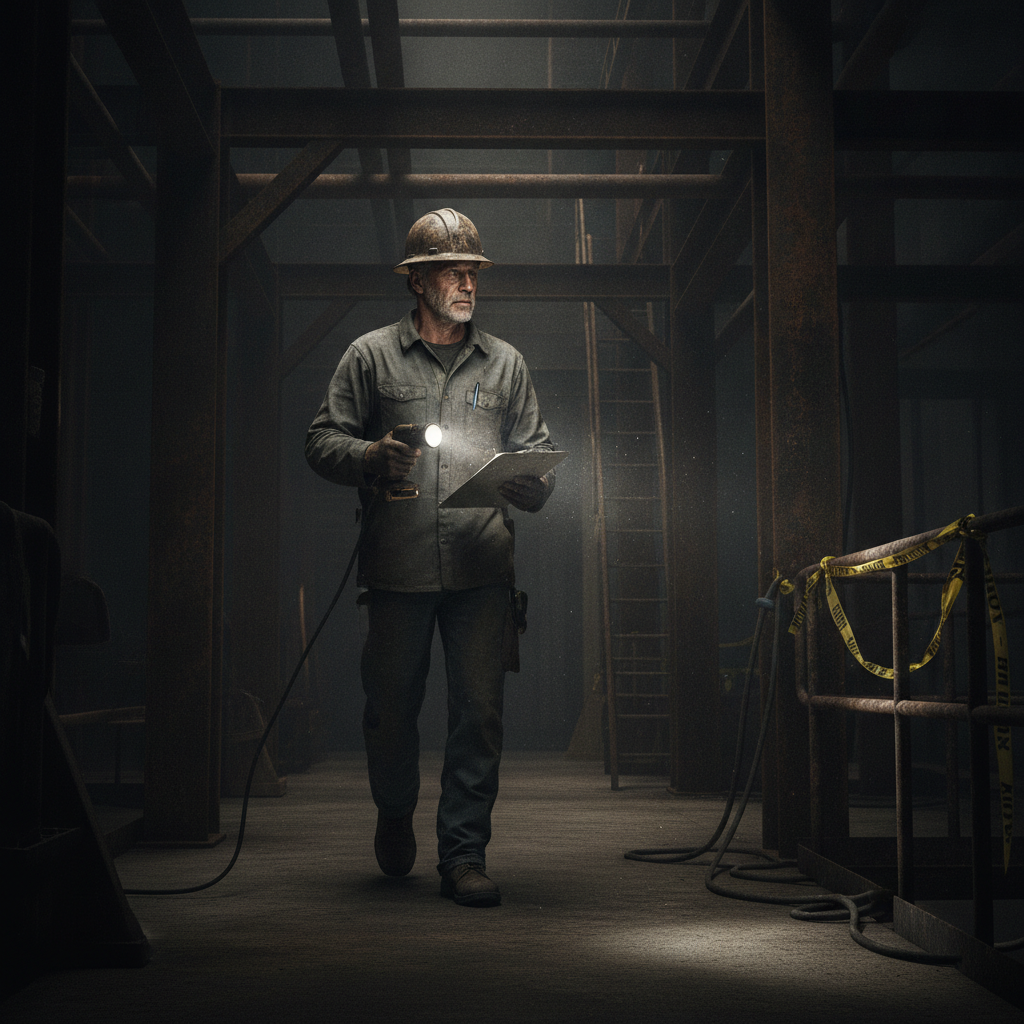
Here’s what I actually walk through on every site visit. I keep a version of this on a clipboard — yes, an actual physical clipboard, because my phone screen is unreadable in direct sunlight and I refuse to apologize for that.
1. Access and Clearance
Can you actually get your equipment to the work? This sounds basic until you show up with a cart that’s 30 inches wide and the doorway is 28. Walk the full path from where you’ll park your rig to where the weld is happening. Measure if it’s tight.
Check for stairs, ramps, overhead obstructions, and soft ground. If you’re bringing a generator or a larger machine, know the weight limits on any grating or elevated platforms you need to cross. Ask. Document what you find.
Confined space situations need their own assessment entirely. If the work is in a vessel, tank, or enclosed structure, you’re dealing with permitting, atmospheric testing, and standby requirements. That changes your quote significantly. Don’t find that out on job day.
2. Power Availability
What power is available on site, and where is it? Don’t assume there’s a convenient 240V outlet anywhere near the work. There often isn’t. Find out now so you can plan accordingly — whether that means bringing your own generator, sizing a longer lead run, or factoring in extra setup time.
If you’re running your own generator, battery-powered or hybrid welding machines can be a game changer on sites where fuel logistics are a headache. But you need to know the site first to make that call intelligently.
Also check for shared power situations. Active facilities with other contractors running equipment can cause voltage drops that’ll have you chasing arc issues all day if you’re not prepared for it.
3. Ventilation and Air Quality
Where is the weld, and what’s the airflow situation? Inside a building with no cross-ventilation is different from outside with a breeze. A confined space with fumes trapped near your face is a health hazard and a regulatory issue.
Check what coatings or finishes are on the base material. Galvanized, painted, or plated surfaces change your ventilation requirements and your PPE requirements. Find out what you’re welding before you commit to a setup plan.
Also note proximity to other workers. Some facilities have restrictions on welding near occupied areas, active production lines, or flammable storage. You need to know those restrictions before you quote the timeline.
4. Material and Joint Condition
What does the actual weld joint look like? Photos lie. Rust, contamination, old weld repairs, distortion, and cracking all affect your prep time and your process selection. If a repair job has been welded multiple times before, you may be dealing with heat-affected zone issues that complicate the work.
If you’re running dissimilar metals or an unusual material combination, the site survey is when you confirm that — not when you’re setting up. Material misidentification is a real problem in the field. A quick look and some questions during your site walk saves you from starting a job with the wrong wire in your machine.
Check joint fit-up if you can. Gaps, misalignment, and poor fitment all add time. If fabrication or prep work is expected as part of your scope, note exactly what’s needed and price it accordingly.
5. Site Hazards and Safety Conditions
What hazards exist that could affect how you work? Active machinery, overhead cranes, chemical storage, high-voltage equipment, and slip or fall risks all need to be noted. Some of these require specific controls or permits before work can start.
Floor conditions matter more than people think. Standing water, oil contamination, and uneven surfaces affect your stability, your equipment placement, and your electrical safety. Note all of it.
If the site has a safety program or a site-specific orientation requirement, find that out now. Some industrial clients require you to complete safety training before you can even enter the facility. That can add hours to your job day if you didn’t plan for it.
6. Scheduling Restrictions
When can you actually do the work? A lot of facilities have maintenance windows, shutdown schedules, or production holds that dictate when welding can happen. If you quote based on an 8-hour straight run and the client can only give you two-hour windows, you’ve just multiplied your mobilization cost for free.
Ask about hot work permit requirements. Understand who issues them and how long it takes. Some plants have a 24-hour notice requirement. If you don’t know that going in, your “start Monday morning” promise becomes a “start Tuesday afternoon” reality.
7. Logistics and Staging
Where will you stage your equipment? Where’s the closest water source? Is there a forklift or rigging available if you need to move heavy material? Where do you park your truck so it doesn’t get ticketed, towed, or blocked in by a delivery truck at 2 PM?
These are not glamorous questions. But every one of them can eat an hour out of your day if you didn’t answer it ahead of time.
How to Document Your Welding Site Survey
You need a system. Not because your memory is bad — maybe it is, maybe it isn’t — but because documentation protects you when the client claims you “agreed to” something you absolutely didn’t agree to. It happens. Have your notes.
A simple form works fine. Date, client name, site address, point of contact, and then your checklist categories. Leave space for notes and sketches. Take photos. Lots of photos. Timestamp everything on your phone.
When you build your quote off that survey, reference it. “Based on site assessment conducted [date]” in your proposal language. If conditions change between your survey and your work date — and they sometimes do — that language gives you standing to revisit the price.
If you want to get sharper about how you structure your business systems overall, looking at measuring before you invest in any particular direction is a habit worth building early. The same logic applies here: know what you’re walking into before you commit resources.
Charging for Site Surveys: Should You?
This comes up. And honestly, it depends on the job size and the client relationship.
For small jobs with a quick site walk, I typically roll the survey time into my minimum charge or quote accordingly. The survey cost is built in. Clients don’t see it as a separate line item and they don’t push back.
For larger projects or clients I haven’t worked with before, I’ll sometimes charge a nominal site assessment fee, especially if significant travel is involved. Frame it as due diligence — you’re ensuring the quote is accurate and the job runs smoothly. Professional clients respect that. Clients who push back hard on a survey fee are often the same clients who’ll fight you on every change order later. File that information accordingly.
As you grow your operation and potentially expand into strategic niche markets, your survey process also gets more sophisticated. Industrial clients, pipeline work, and structural fabrication all have their own site assessment requirements. Building good habits now scales with you.
What Happens When You Skip the Survey
Let me give you the short version, because I’ve lived most of these personally:
You quote three hours and the job takes eight. You show up without the right process equipment because you didn’t know the material. You can’t get your machine to the work and spend an hour improvising. You’re in a confined space with no ventilation plan and spend the afternoon with a headache and a liability problem. You run out of shielding gas because the job was three times bigger than you thought. The hot work permit takes four hours to issue and you sit there getting paid nothing while the clock runs.
None of that is theoretical. All of it is preventable with a proper welding site survey. The survey takes maybe 30-60 minutes on most jobs. What it saves you is measured in hours, dollars, and the kind of stress that ages you faster than you’d prefer.
Building the Survey Into Your Standard Process
The best way to make sure this happens on every job is to make it non-negotiable in how you take on work. When a new client calls and wants a quote, your standard response is: “I’ll need to walk the site before I can give you a number.” Full stop.
Most clients respect it. The ones who don’t — who just want a number over the phone sight unseen — are telling you something about how they operate. Take note of that too.
If you’re building out your mobile welding business and thinking hard about equipment choices, knowing what you’re walking into on sites helps you make better decisions about what to carry. Field-ready multi-process welders are worth the investment specifically because they give you flexibility when a site survey reveals a process surprise. Same goes for your power options — field-ready battery welders have changed what’s possible on tight-access and power-limited sites.
And as you think about growing toward certifications and higher-tier work, the discipline of proper site assessment fits right in with the professional documentation habits you’ll need. Planning your certification readiness is the same muscle as planning your job readiness — both are about removing surprises before they cost you.
The Bottom Line
A welding site survey is not extra work. It is the work — the part of the work that makes everything else go smoothly. Skip it and you’re gambling with your time, your money, and your reputation on every single job.
Walk the site. Document what you find. Quote from facts, not assumptions. That’s the whole system. It’s not complicated and it’s not glamorous, but it is the difference between a business that builds margin and one that bleeds it.
You spent years getting good at putting down quality welds. Spend 30 minutes making sure the job you’re about to do is actually set up to go the way you planned. Your future self — the one who isn’t crawling through an 18-inch access hatch with a generator lead and a very bad attitude — will thank you.