Your Welding Truck Is a Target. Period.
Let me be straight with you. That rig you built up over the last five, ten, maybe fifteen years? To a thief who knows what they’re looking at, it’s a lottery ticket with legs. A decent Miller or Lincoln welder, a handful of angle grinders, your leads, your rods, your plasma cutter — that’s $20,000 to $50,000 sitting behind a sheet metal door with a $12 lock from the hardware store. Tool theft prevention isn’t optional when you’re running a mobile welding business. It’s the difference between working Tuesday morning and spending Tuesday on the phone with your insurance company watching your schedule burn down.
I’ve had gear stolen twice in my career. Once early on when I was naive, and once when I got complacent. Neither time was fun. So consider this your peer-to-peer briefing on what actually works — not what looks good on paper.
Know What You’re Protecting (And What It’s Worth)
Before you spend a dime on security, take a full inventory. I’m talking photos, serial numbers, model numbers, purchase receipts — everything. Do it this week. Most welders don’t do this until after something gets stolen, which is roughly the worst possible time to start.
Your inventory list should include:
- Welders and power sources (note serial numbers on the data plate)
- Wire feeders, leads, and ground cables
- Plasma cutters and torches
- Angle grinders, cut-off tools, and die grinders
- Hand tools — especially anything Snap-on or Knipex
- Gas bottles and regulators
- Safety gear and PPE
Take that list and get a replacement cost total. That number is going to motivate you. It’s also what your insurance adjuster is going to ask for, and “I had a bunch of stuff” won’t cut it.
If you’ve been building up your equipment investments alongside upgrading your capabilities — say, moving into field-ready multi-process welders or picking up hybrid battery-powered welders for remote site work — your replacement cost might be significantly higher than you think. Price out every line item. Then triple-check it.
Physical Security: The First Line That Actually Matters
Alarms are great. Cameras are useful. But a determined thief with a cordless angle grinder and 90 seconds doesn’t care about your camera if the physical barrier is weak. Physical hardening is your first layer, and it needs to be real.
Toolbox and Storage Security
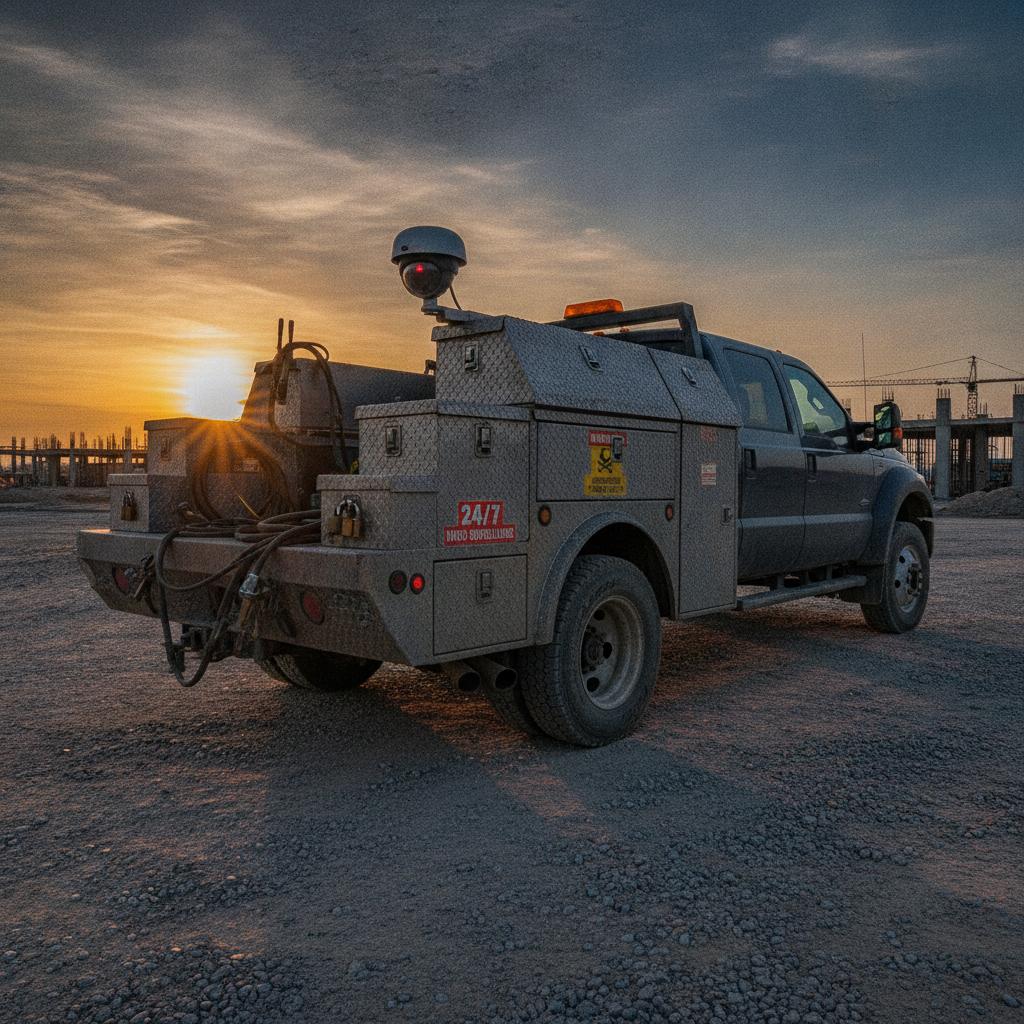
Not all truck boxes are created equal. The powder-coated aluminum boxes that come stock on most service trucks? They’re lightweight, they look nice, and a pry bar pops them in about 15 seconds. If you’re serious about tool theft prevention, you need to upgrade.
Look for heavy-gauge steel boxes with puck locks or shrouded hasps. Puck locks — also called hockey puck locks — are disc-style padlocks that sit recessed in a hasp, making them nearly impossible to cut with bolt cutters or attack with a hammer. Brands like ABUS and Abloy make solid options. Pair them with a hasp that’s welded or through-bolted, not just screwed in. You know how to weld. Use it.
For your welder itself, consider building a dedicated cage or slide-out drawer system with a locking mechanism. A lot of guys bolt their welder to the truck bed and run a heavy chain through the frame. It’s not elegant, but it works. Thieves move on to easier targets.
Trailer Security
If you’re pulling a welding trailer, that’s a whole additional problem. Trailer theft is fast — someone pulls up with a ball hitch, hooks up in 30 seconds, and drives off while you’re inside eating lunch. Use a coupler lock every single time the trailer is unattended. A wheel boot as a secondary measure is even better. And if your trailer has its own tool storage, everything above applies there too.
A heavy hitch pin lock with a shrouded design goes a long way. Cheap insurance against losing your entire rig in a parking lot.
Electronic Security: Layers That Work Together
Physical barriers buy you time. Electronics alert you and give you evidence. You need both. Here’s what’s actually worth running on a mobile rig.
GPS Trackers
This is non-negotiable in 2026. Put a GPS tracker on your truck. Put one on your trailer if you run one. Put one inside your most expensive piece of equipment — hidden, hardwired where possible. When your welder walks off, you want to hand the cops a real-time location, not a police report number and a sad feeling.
There are solid options from LandAirSea, Bouncie, and MOTOsafety that run on monthly subscriptions. Hardwire them to your truck’s power so they never go dead. A secondary battery-backed unit inside a toolbox is smart redundancy. The subscription cost is nothing compared to replacing one Lincoln Power MIG.
Dash Cams and Security Cameras
A dash cam with parking mode records activity around your truck when it’s parked and the engine is off. Blackvue and Thinkware both make units with this feature. It runs off the truck battery with a hardwire kit and a low-voltage cutoff so you don’t drain your battery dead.
For job site situations, a small magnetic mount camera aimed at your toolboxes isn’t overkill. It’s documentation. When the insurance company or the cops want to know what happened, you have footage instead of a guess.
Alarm Systems
A dedicated truck alarm with perimeter sensors, motion detection, and a loud siren does two things: it startles the thief and it alerts people nearby. Most professional-grade alarms also have a two-way pager that wakes you up at 2am when something sets it off. CompuStar and Viper both make systems worth considering for a work truck setup.
Add door contact sensors to your toolbox lids if you can. The goal is layered noise — the more chaos a thief has to deal with, the faster they leave.
Operational Security: The Habits That Protect You
Here’s the thing most guys don’t want to hear: the best security system in the world doesn’t help you if you park wrong, work the same patterns every day, and leave your truck unattended on a sketchy site overnight without a second thought. Habits matter.
Where You Park Matters
Park under lights when possible. Park in visible areas where foot traffic or security cameras already exist. Back your truck into corners so the toolboxes face a wall — less access, less temptation. If you’re on a secured job site, park inside the fence. If the site has a watchman, introduce yourself. People look out for rigs they’ve seen a face attached to.
Don’t Leave More Than You Have To
This sounds obvious, but pull what you need for the day and lock the rest down. Don’t leave your plasma cutter sitting in the bed while you run inside for 20 minutes. Don’t leave your grinders on the tailgate when you break for lunch. The five seconds it takes to throw something in the box and lock it is a worthwhile investment. Thieves are opportunists. Remove the opportunity.
Vary Your Routine
If you’re on a long project and your truck is parked in the same spot every day at the same time, you’re predictable. Predictable is a liability. Change it up when you can — different parking spots, different times, different access points. It’s small, but it matters.
Insurance That Actually Covers Your Rig
Let’s talk about the part where most welders get burned twice — once by the thief and once by their insurance company. Standard personal auto insurance does not cover your tools and equipment. If you think your truck policy covers your $8,000 welder bolted in the bed, you need to call your agent today. Right now. Before you finish reading this.
Commercial Auto vs. Inland Marine
You need commercial auto insurance on your work truck — full stop. But commercial auto typically covers the vehicle, not the equipment inside it. For the tools and gear, you need an inland marine policy, sometimes called a tools and equipment floater. It sounds weird for a guy who works on land, but that’s the product category that covers mobile equipment that moves between job sites.
An inland marine policy typically covers theft, fire, and accidental damage to your tools wherever they are — not just when they’re in your truck. That matters when a grinder gets stolen off a job site during the day.
What to Look For in a Policy
When you’re shopping for coverage, ask specifically about:
- Replacement cost vs. actual cash value — Always push for replacement cost. Actual cash value means they pay depreciated value, which on a five-year-old welder might be half what it costs to replace it.
- Per-item limits — Some policies have low per-item caps. If your welder costs $6,000, make sure your per-item limit isn’t $2,500.
- Deductibles — A $1,000 deductible on a $500 grinder claim means you’re not filing a claim. Understand your thresholds.
- Overnight storage requirements — Some policies require equipment to be stored in a locked building overnight to be covered. If your gear lives in the truck 24/7, verify that’s covered.
Talk to an agent who actually understands contractor and trades coverage. A general personal lines agent may not know the right questions to ask. Look for agents who work with contractors, tradespeople, or small construction businesses regularly.
If you’re building out your business model and figuring out where tools and insurance fit into your pricing, check out this breakdown on pricing for certification services — the same logic about covering your true costs applies directly to protecting your equipment investment.
Mark Your Gear and Make It Hard to Sell
Stolen tools get sold. That’s the whole point for the thief. Make your gear harder to move by making it obviously marked. Engrave your name, your business name, or a unique identifier on every piece of equipment. Use a paint pen for smaller items. Apply your business stickers to everything visible.
Register your serial numbers with services like NAMB (National Association of Metal & Builders) registries or simply keep them on file with your local police department as a stolen property reference. Some states have contractor tool registration programs. Use them.
A thief who grabs a welder covered in your name with a visible GPS sticker has a harder time flipping it at a swap meet. You’re making yourself a bad target on purpose. That’s the goal.
Building a Security Mindset Into Your Business
Security isn’t a one-time purchase. It’s a system you maintain and upgrade as your rig grows. When you add a new piece of equipment — say you’ve invested in a field-ready battery welder for off-grid work or picked up specialty gear to support a strategic niche you’ve been developing — that new gear needs to be added to your inventory, your insurance policy, and your physical security plan. It’s not automatic. You have to do the work.
Treat your rig the same way you treat your business finances. If you’ve been working through smart planning tools like a heat map for startup decisions or thinking carefully about measuring your investments before you make them, apply that same discipline to your security posture. Know what you have. Know what it costs. Know how it’s protected.
The guys who lose everything to theft usually say the same thing afterward: “I knew I should have done more, I just kept putting it off.” Don’t be that guy. The tools you lose are the ones you didn’t bother to protect.
Quick-Reference Security Checklist
Here’s a fast rundown you can use this week:
- Inventory: Photo and document every piece of gear with serial numbers
- Physical: Upgrade to puck locks and reinforced hasps on all storage
- Tracking: Install hardwired GPS on truck and trailer, secondary unit in welder
- Monitoring: Add a parking-mode dash cam and perimeter alarm
- Parking: Lights, visibility, back-in positioning, vary your spot
- Insurance: Verify you have commercial auto AND inland marine coverage at replacement cost
- Marking: Engrave, sticker, and register your serial numbers
- Habits: Lock up every time, every break, no exceptions
The Bottom Line
Tool theft prevention isn’t complicated, but it does require you to actually do it. Most mobile welders know they should have better security. Most don’t get around to it until something gets taken. Don’t learn this lesson the hard way. A puck lock costs $40. A GPS tracker subscription runs $10 a month. An inland marine policy is a few hundred bucks a year.
Your welder? Your plasma cutter? Your leads and your grinders and the truck you built your business around? Those aren’t replaceable on a phone call. Protect the rig like your income depends on it — because it does.
You built this thing from scratch. Don’t let some guy with a pry bar and 90 seconds take it from you.