Let’s talk about welding fume extraction — the thing most of us ignored for years until someone got sick, got cited, or got their business shut down. If you’re still running that little oscillating fan you grabbed off the clearance rack, I’m not judging you. I did the same thing for longer than I should have. But those days are over, and if you’re running your own operation, you need to hear this before OSHA says it louder and with paperwork.
Why Welding Fume Extraction Is Now a Business Survival Issue
Here’s where a lot of guys go wrong. They treat fume extraction like an optional upgrade. Like a nice-to-have. Something they’ll “get around to” once the work picks up.
The work picks up. The extraction never happens. Then one day there’s a complaint — a coworker, a client, a nosy neighbor near a job site — and suddenly OSHA is on-site with a clipboard and an attitude.
And unlike your buddy at the supply house, OSHA doesn’t care about your excuses.
In 2021, OSHA lowered the permissible exposure limit (PEL) for hexavalent chromium and significantly tightened enforcement around general welding fumes. The legal threshold for manganese exposure — which comes off every MIG and flux-core bead you run on mild steel — is 0.02 mg/m³ as a ceiling limit. That number is almost impossible to meet without real welding fume extraction in place.
We’re not talking about exotic alloys here. We’re talking about every day, bread-and-butter work. Structural steel. Pipe. Gate frames. The stuff you quote out of habit.
What OSHA Actually Looks For During an Inspection
Most inspectors who walk onto a welding job site aren’t coming in blind. They know exactly what to look for, and they’ve seen every shortcut in the book. Here’s what gets flagged fast.
Lack of Any Documented Hazard Assessment
Before they even look at your equipment, they want paperwork. A written hazard assessment showing you identified fume exposure risks and took steps to control them. No documentation? That’s a citation before anyone even puts their hood down.
If you’re building your business from the ground up, this kind of operational groundwork matters more than most guys realize. The post on going from garage to shop gets into some of that — the point where you stop winging it and start running a real operation.
Inadequate Engineering Controls
This is where the Harbor Freight fan argument falls apart completely. OSHA’s hierarchy of controls puts engineering controls above PPE. That means your respirator doesn’t replace a fume extractor. It supplements one.
An inspector will look at your workspace and ask a simple question: Is there a mechanical system actually capturing fumes at the source? A box fan blowing across the room doesn’t answer that question. Neither does an open garage door.
No Respiratory Protection Program
If you have employees — even one — you need a written respiratory protection program. Medical evaluations. Fit testing. Documented training. This is 29 CFR 1910.134, and it’s not negotiable.
Running solo? You still need to prove you’ve assessed the exposure and made informed decisions about protection. “I crack the door” is not a documented decision.
Missing or Inadequate SDS Documentation
Every filler metal, flux, and coating you burn through needs a Safety Data Sheet on file. Stainless rod. Aluminum wire. That mystery rod someone left in the corner. If it gets burned, it needs an SDS. No exceptions.
The Real Cost of Getting This Wrong
Let’s talk numbers, because that’s what actually gets people moving.
A serious OSHA citation — the kind you get for willful or repeat violations — can run up to $15,625 per violation. Per. Violation. And they don’t write one citation for “bad air.” They write separate citations for the missing hazard assessment, the missing written program, the lack of fit testing, and the inadequate engineering controls.
You do that math.
Now add the insurance angle. Once you have OSHA citations on record, your general liability carrier and your workers’ comp carrier start asking uncomfortable questions. Some of them stop answering your calls altogether. And if you’re trying to land commercial or industrial contracts — the kind that actually pay well — many of those clients run compliance checks before they sign anything.
Citations show up. Clients notice. Contracts disappear.
This is the same reason getting your business infrastructure right from the start matters. If you’re thinking about how to price your services competitively, check out the breakdown on pricing for certification services — the operational overhead of compliance is part of your real cost structure, whether you’re accounting for it or not.
What Actual Welding Fume Extraction Systems Look Like
Alright. So you’re convinced. What are you actually buying?
Source Capture Units (Portable Extractors)
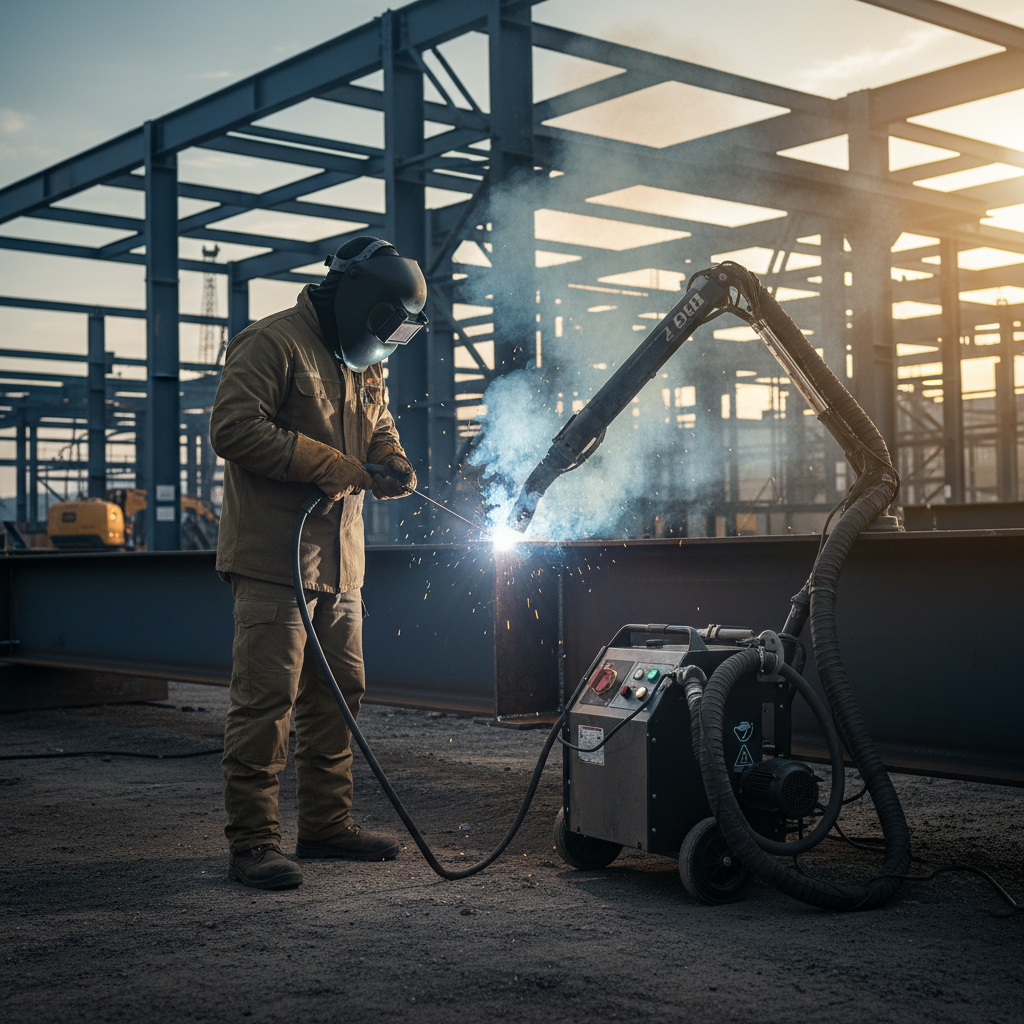
These are your workhorses for mobile and shop work. A portable fume extractor with a flexible arm or magnetic tip that positions close to the weld pool — typically within 6 to 8 inches. They pull fumes directly at the source before the plume reaches your breathing zone.
Look for units with HEPA filtration and activated carbon for volatile organic compounds. Airflow ratings matter — you want at least 800–1,000 CFM for most open welding applications. Units with filter saturation indicators save you from running a clogged system and thinking you’re protected when you’re not.
For mobile work, weight and portability are real factors. There are backpack-style units and cart-mounted units. Neither is cheap. Both are cheaper than a citation and a health problem.
Ambient Air Filtration Systems
These are ceiling-mounted or wall-mounted units that filter the general shop air. They’re not a replacement for source capture — they’re a supplement. Think of them as your backup system, cleaning up what source capture misses.
In a shop environment, these make sense once you’re past the one-man-in-a-trailer stage. If you’re scaling up, they’re worth planning for early.
Downdraft Tables
For bench work and smaller fabrication, a downdraft table pulls fumes down through the work surface. Useful for grinding operations too. Not practical for structural work or anything you’re doing on-site, but worth having in a permanent shop setup.
Local Exhaust Ventilation (LEV) Systems
These are fixed-position hood systems ducted to the outside or through filtration. Common in production environments. If you’re running a permanent shop and doing high-volume work on one type of material, LEV is worth the investment and the installation cost.
Mobile Welders Have a Specific Problem — And a Solution
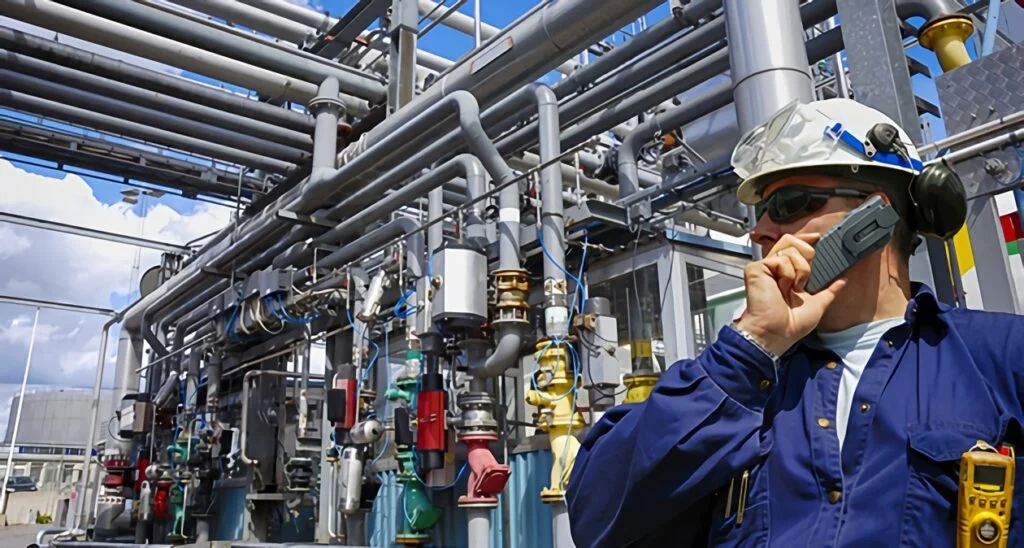
Here’s the thing about running a mobile operation. You can’t bolt a ceiling unit to a job site. You’re welding in fields, under bridges, in equipment bays, in basements. Every location is different. Every ventilation situation is different.
That’s not an excuse. That’s a planning challenge.
The answer for mobile guys is a high-quality portable source capture unit and a documented job-site ventilation assessment process. Before you strike an arc on a confined space job, you assess airflow, you position your extractor, and you document what you did. That documentation is what saves you when someone comes looking.
If you’re running multi-process out in the field, your equipment choices already reflect a mobile-first mindset. The same thinking applies to safety equipment. The post on field-ready multi-process welders covers some of that equipment philosophy — and fume management should be on the same list as your machine selection.
Specific Material Hazards Worth Understanding
Not all fumes are equally dangerous. Some materials are significantly worse and require additional controls or monitoring.
Stainless Steel and Chrome Alloys
Hexavalent chromium. This is the one that gets people’s attention fast. It’s a known carcinogen. OSHA has a specific standard for it — 29 CFR 1926.1126 for construction. The PEL is 5 micrograms per cubic meter as an 8-hour TWA. You almost certainly can’t meet that without source capture extraction.
If you’re expanding into dissimilar metal welding or working with chrome-moly and stainless combinations, this needs to be on your radar before you pick up the first rod.
Galvanized Steel
Zinc oxide fumes. Metal fume fever. Most welders have had it at least once — the chills, the flu-like symptoms, the “I thought I was dying” night. It’s short-term miserable and potentially long-term serious with repeated exposure. Galvanized work needs aggressive ventilation and respiratory protection every single time.
Aluminum
Aluminum oxide fumes are a pulmonary irritant with potential long-term respiratory effects. MIG welding aluminum with argon shielding generates significant fume. Don’t let the “it’s just aluminum” mindset make you lazy about extraction.
Speaking of shielding gas — if you’re not managing your gas consumption intelligently, you’re also not managing your fume environment as well as you could be. That connects directly to the discussion in the smart shielding gas management post.
Coated and Painted Steel
Old paint. Primers. Industrial coatings. These generate a cocktail of fumes that can include lead, isocyanates, and various solvents depending on what’s on the steel. Grinding and burning through painted surfaces is one of the most underestimated hazards in field welding. Source capture and a P100 respirator at minimum. Always.
Building Welding Fume Extraction Into Your Business Model
This is the mindset shift that separates guys who are still welding at 55 from guys who aren’t.
Proper welding fume extraction isn’t an overhead cost. It’s a cost of doing business that you price into your quotes. A quality portable extractor runs $800 to $3,000 depending on specs. Amortized over its lifespan, it’s probably $10 to $20 per job on average. You can price that in. You should price that in.
Your clients who care about safety — and the good ones do — will actually see that equipment on your truck and feel better about hiring you. It signals professionalism. It signals that you’re not cutting corners. That’s worth something in a competitive market.
If you’re still figuring out which niches are worth pursuing for your mobile business, the strategic niches post is worth a read. The niches that pay the best are often the ones with the toughest compliance requirements — which means if you’re already compliant, you have a competitive advantage over the guy who isn’t.
The Practical Checklist Before Your Next Job
Let’s make this actionable. Here’s what you need to have sorted before an inspector shows up — or before you walk into a confined space with questionable ventilation.
- Written hazard assessment — document the fume risks for the materials and processes you run.
- Source capture extraction unit — a real one, not a fan.
- Respiratory protection program — written, with fit testing documented if you have employees.
- SDS file — for every consumable you burn. Keep it accessible.
- PPE records — what respirators, what filters, replaced on what schedule.
- Job-site ventilation notes — especially for confined spaces or unusual locations.
- Filter maintenance log — your extractor is useless with a saturated filter.
None of this is complicated. It’s just paperwork that most guys won’t do until something goes wrong. Be the guy who does it beforehand.
Bottom Line on Welding Fume Extraction
The lungs you’re working with right now are the only ones you get. And the business you’re building — the one you’ve put years and real money into — deserves better than getting shut down over something preventable.
Welding fume extraction isn’t glamorous. It doesn’t make your welds prettier. It doesn’t win you Instagram followers. But it keeps you healthy, keeps you legal, and keeps your business running when the inspector who’s already in the parking lot of the next job site comes walking your way with a clipboard.
Invest in the right equipment. Do the paperwork. Price it into your quotes. And stop pretending that fan on the floor is doing anything except moving hot air around.
You’ve worked too hard to let this be the thing that ends it.