If you’ve ever spent twenty minutes digging through your truck bed looking for a #5 cup before you’ve even touched a rod, congratulations — your mobile rig setup is robbing you blind. That’s not setup time. That’s money you already spent running to the job that you’re now handing back to the universe for free. Every minute you’re rooting around in a pile of leads, grinders, and mystery parts is a minute you’re not billing. And nobody’s going to pay you for your organizational incompetence, I promise you that.
This post is for the welder who’s running their own rig — or thinking about it — and wants to stop looking like they showed up in a panic and start looking like someone who’s done this a hundred times. Because the guys who move fast on a job site aren’t always faster welders. A lot of times, they just know exactly where everything is.
Let’s go through the mistakes I’ve seen (and made) and what actually fixes them.
The #1 Mobile Rig Setup Mistake: No System At All
Most welders load their truck the way they unload their pockets at the end of the day — just dump it somewhere and deal with it later. Later never comes. Then you’re on a job site at 7 AM trying to explain to a foreman why you need five more minutes while you’re excavating through a layer of rods, wire spools, soapstone, and a socket set that somehow ended up in the welding bay.
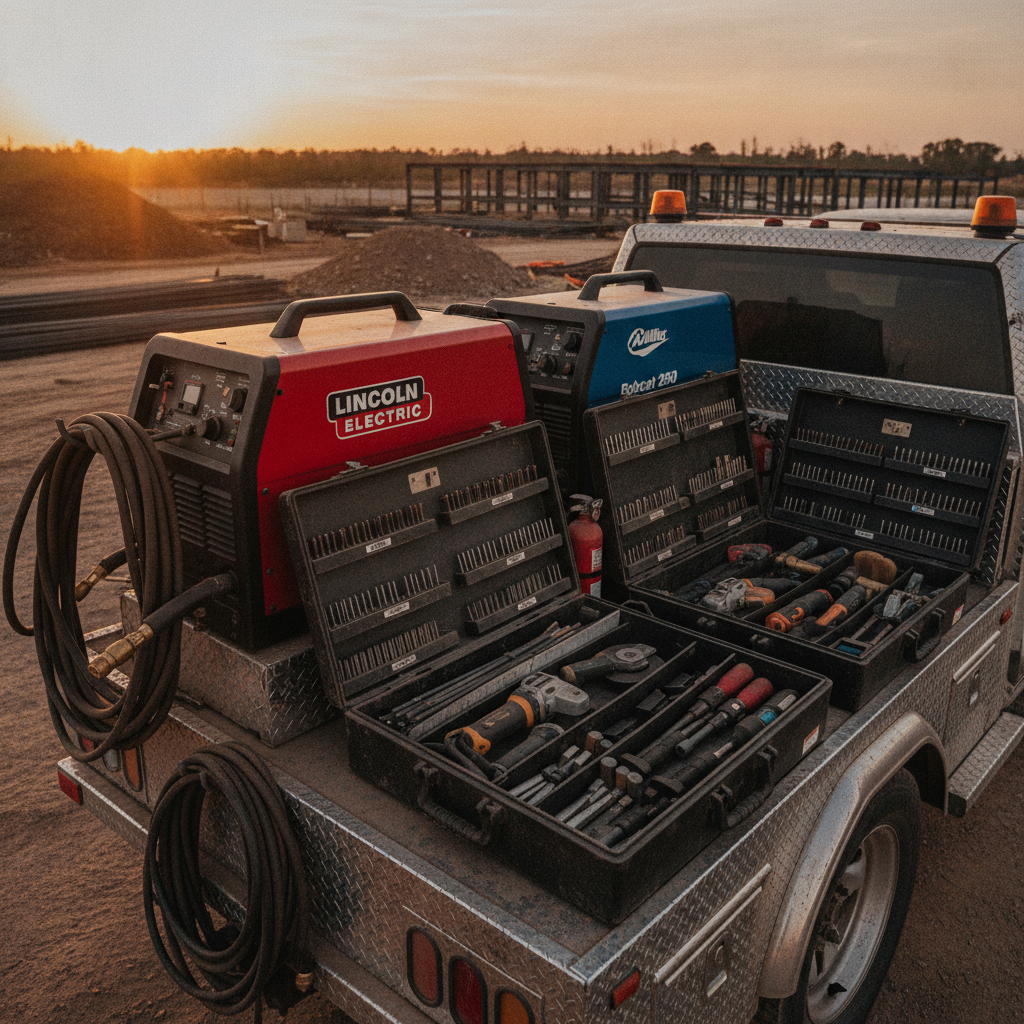
The fix isn’t fancy. It’s zones. Your truck bed — whether it’s a flatbed, a service body, or a regular pickup — needs to be divided into logical zones based on how often you use things and when you need them in your workflow.
Think about it like this:
- Zone 1 — First touch: Safety gear, grinders, leads, electrodes/wire. Everything you need from truck-to-arc goes here.
- Zone 2 — Mid-job: Clamps, magnets, squares, extra consumables, tie wire.
- Zone 3 — Rarely used: Backup parts, extra tips, specialty tools, paperwork.
This sounds stupidly simple. That’s because it is. But I’d bet money most of you reading this don’t have it. If you’re just getting started building your business from the ground up, the From Garage to Shop post covers a lot of the early organizational decisions that pay off later.
Your Leads Are a Disaster and You Know It
Leads might be the single biggest time-waster on a mobile rig. They tangle. They get stepped on. They get buried under three other things. You pull one end and you can’t find the other for a full minute. Meanwhile the clock is running.
Here’s what works: dedicated lead hooks or hose reels mounted to the side of the truck or on the service body. Not a bucket. Not “coiled and thrown in the corner.” Actual mounted hooks that hold the lead in a consistent figure-eight wrap. Takes thirty seconds to hang. Takes thirty seconds to grab and go.
If you’re running multiple processes — stick, MIG, TIG — label your leads. I don’t care if you think you’ll remember. You won’t at 6 AM. Color-coded heat shrink at the connectors costs almost nothing and saves you from grabbing the wrong lead in bad light.
Speaking of running multiple processes, if you’re thinking about which machine to put on your rig, I wrote about field-ready multi-process welders and what actually holds up on a job site versus what looks good in a spec sheet.
Gas Cylinders: Chained, Positioned, and Not in Your Way
Nothing slows down a job like a cylinder that tips over, rolls under your feet, or takes three people to wrangle because it wasn’t secured properly. Beyond the safety issues — which should be obvious — a poorly positioned cylinder means you’re re-routing your hose every time you move, which eats time.
Cylinders should be chained upright, positioned so the regulator faces away from the direction of travel, and accessible without having to move other equipment to get to them. On a service body, this usually means a dedicated cylinder rack on one side. On a flatbed, you want them toward the cab end, low and chained to a crossmember.
Your regulator should be easy to reach and easy to read. You should be able to check your gas pressure without bending like a pretzel. If you’re managing multiple gas types — CO2, argon, mixed gas — label the cylinders and regulators clearly. There’s more on managing your shielding gas setup without headaches in the Smart Shielding Gas Management post.
Consumables: Stop Treating Them Like an Afterthought
Running out of wire mid-job because you didn’t check your spool before leaving the shop. Grabbing a contact tip that’s the wrong size because they’re all mixed together in a bag. Spending four minutes looking for the right rod diameter because they’re all in the same tube.
Sound familiar? Yeah. This is a consumables organization problem and it’s embarrassingly common.
Here’s the simple fix: a small, dedicated consumables box mounted in an accessible spot on your rig. Inside that box, you want divided sections or labeled bags for each consumable type and size. Contact tips by size. Rods by diameter and process. Cups by size. Lenses by shade.
Restock this box at the end of every workday. Not the end of the week. Not when you run out. Every day. It takes five minutes and it means you never show up to a job short. If you’re pricing jobs and your consumable costs keep eating your margin, the Pricing for Certification Services post has some frameworks for building materials costs into your rates correctly.
Tools That Aren’t Where You Think They Are
The angle grinder is the most important tool on a mobile rig after the welder itself. You’ll use it more than almost anything else. So why do so many guys toss it wherever there’s space and then hunt for it every single time?
Mount a grinder holder. There are magnetic holders, rack-style holders, and simple hooks that keep your grinder in one spot, disc-down so the guard protects the disc. Same concept for your wire brush, chipping hammer, and any other tools you use on every single job.
If it lives on your rig permanently, it gets a permanent home. Full stop.
This goes double for your measuring and layout tools — tape measure, square, level, soapstone, markers. These small things disappear constantly on a disorganized rig. A simple pouch or small drawer labeled “layout” keeps all of them together. You grab the pouch, you have everything. Done.
Your Welder Isn’t Secured and That’s a Problem
This one’s less about efficiency and more about not destroying your machine on the way to the job. But it also slows you down because a machine that’s been sliding around in the back of your truck for forty miles might need to be repositioned, re-leveled, or checked before you can safely run it.
Weld it down. Bolt it down. Use rubber-mounted brackets. However you do it, the machine should not be able to move in transit. If you’re running a diesel-driven welder, it should be mounted like it’s part of the truck — because effectively it is. If you want to know what machines are actually worth building a rig around, I covered field-ready battery welders and the newer hybrid options that are starting to show up on mobile setups. There’s also a good breakdown of hybrid battery-powered welders if you’re evaluating your options for a new build.
The Lighting Problem Nobody Talks About
You’re going to work in the dark. Not because you’re doing anything sketchy — because that’s when jobs happen. Early mornings, late evenings, inside structures with no natural light. A rig with no work lighting is a rig that forces you to either fumble around or waste time setting up portable lights every single time.
Mount LED bar lights on your rig. Pointing down at your work area. Wired to a switch on the truck. This is a one-time setup that pays back on the very first dark job. It’s not glamorous but it’s practical, and practical is what pays bills.
While you’re at it, a good headlamp lives in Zone 1 of your rig. Not in your toolbox at home. On the rig. Always.
Not Having a Job-Start Checklist
I know. Checklists feel like something they make you do in safety meetings. Hear me out.
A laminated one-page checklist on the inside of your toolbox lid covers your truck-to-arc sequence. It’s not because you’re forgetful — it’s because the human brain is terrible at remembering routine tasks under pressure, especially at the start of a long day or a stressful job. The checklist removes the cognitive load and lets you move fast without missing things.
Your checklist should include: machine secured and connected, gas pressure checked, leads connected and correct, consumables stocked and correct for the job, PPE accessible, fire watch equipment out if needed, work area assessed for hazards.
Takes ninety seconds to run through. Saves you from the moment forty-five minutes into a job when you realize you’ve been running argon on a flux-core pass because you grabbed the wrong regulator.
If you’re building out your business systems beyond just the rig itself, the Smart Heat Maps for Startups post is worth a read for figuring out where your time and money are actually going.
Loading for the Job, Not Loading for Everything
Here’s a trap a lot of guys fall into: they load their rig for every possible job they might ever do, and then the truck is so full they can’t find anything and half the stuff is never used. Your rig should be loaded for the work you’re actually doing that week, with a baseline of essentials that never leave.
Before Monday morning, look at your schedule. What processes are you running? What materials? What positions? Load accordingly. Leave the extra gear at the shop unless you have a specific reason to bring it. A lighter, more organized rig is faster to work from than a truck that’s packed to the rails with every contingency you’ve ever imagined.
This also protects your equipment. Less gear bouncing around means less gear getting damaged in transit. Every consumable and tool has its place because there aren’t fifty things competing for space.
The Small Stuff That Adds Up
Let me rattle off a few more quick wins that I’ve seen make real differences on job time:
- Zip tie mounts for your phone — a simple phone holder on your rig means you’re not fishing your phone out of your pocket to check drawings or call the foreman. Keep it visible.
- A dedicated broom and magnet sweeper — you need to clean up after yourself, and having these on the rig means you don’t have to borrow them or leave a mess.
- A fire extinguisher that’s actually accessible — not buried, not behind something, accessible.
- A power strip or USB outlet on the truck — for charging your phone, angle grinder batteries, or running a small tool without hunting for a drop cord.
- Water and a first aid kit in Zone 1 — not in the cab, not maybe in the toolbox, actually accessible and restocked.
None of these are revolutionary. But all of them together add up to a rig that runs like a business instead of a pile of equipment that happens to be welding-related.
What a Good Mobile Rig Setup Actually Looks Like
When your mobile rig setup is dialed in, here’s what a job start looks like: you pull up, do a quick walk-around, grab your leads off the hooks, connect your machine, check your gas, grab your consumables pouch, run your ninety-second checklist, and you’re striking an arc inside of ten minutes. The customer sees someone who looks professional. The foreman sees someone who doesn’t need hand-holding. And you’re billing for welding, not for fumbling.
That’s the goal. Not perfection. Not a truck that looks like a magazine shoot. Just a system that works, every time, so you can focus on the actual job instead of the logistics of getting to it.
If you’re still in the early stages of building your mobile welding business and figuring out where to focus your energy, the Strategic Niches post is a solid read for deciding what kind of work to build your rig around in the first place. Your rig should match your niche — a pipe welder’s setup looks different from a structural guy’s setup, and both look different from the guy doing maintenance and repair on agricultural equipment.
Get the mobile rig setup right and everything else on the job gets easier. Get it wrong and you’re fighting your own truck every single day. One of those sounds like running a business. The other sounds like a bad habit you’re paying for.
Fix the habit.