Your mobile welding security setup determines whether you’re still in business next month or filing insurance claims. That $80,000 rig parked outside? Thieves see it as a rolling goldmine packed with easily resold gear. Basic door locks won’t cut it when your livelihood sits on wheels.
I’ve watched too many welders learn this lesson the hard way. One minute they’re pulling solid contracts, the next they’re borrowing equipment just to finish jobs because some jackass cleaned out their truck overnight. Don’t be that guy.
Why Mobile Welding Security Matters More Than You Think
Let’s talk numbers. Your average mobile setup runs $50,000 to $100,000 easy. Miller Trailblazer, leads, plasma cutter, grinders, consumables, hand tools – it adds up fast. That’s more than most people spend on their house down payment.
But here’s the kicker: thieves know exactly what they’re looking at. They’re not grabbing random stuff hoping it’s valuable. They know a Lincoln Ranger from a Harbor Freight welder at 50 yards. They know which field-ready multi-process welders bring top dollar on the black market.
Insurance helps, sure. But try explaining to your best customer why their emergency repair job got pushed back three weeks because your truck got hit. That relationship damage? That’s not covered by any policy.
The Real Threats to Your Mobile Welding Security
Forget what you see in movies. Most thefts happen during normal business hours when you’re distracted or away from the rig for “just five minutes.” Here’s what actually happens out there:
Opportunistic Grabs: You’re inside grabbing lunch, someone pops your truck bed locks and walks off with your portable plasma cutter. Gone in under two minutes.
Jobsite Thieves: Other contractors scope your gear all day. They know your routine, when you take breaks, where you park. They come back at night with a plan.
Fuel Theft: Diesel’s expensive. Your truck’s an easy target sitting in commercial lots overnight. They don’t just take fuel – they’ll trash your tank doing it.
The Inside Job: Someone you’ve worked with knows exactly what you carry and where you keep it. Hardest theft to prevent because they have inside information.
Location-Specific Risks
Where you work changes everything. Industrial areas mean more foot traffic but also more security cameras. Residential jobs put you in unfamiliar neighborhoods where you stick out like a sore thumb.
Remote jobsites are worse. No witnesses, no cameras, no help coming. I’ve seen guys lose entire rigs on pipeline jobs because they parked in the wrong spot overnight.
Physical Security Measures That Actually Work
Time for real solutions. Not the marketing fluff from security companies, but gear that works in the field.
Vehicle Security Basics
Kill Switches: Hidden cutoffs for ignition, fuel pump, or starter. Multiple switches in different locations. Make the truck impossible to hotwire without finding all of them.
Steering Wheel Locks: Yeah, they look old school. But they work. Can’t drive off what you can’t steer. Get the heavy-duty ones that require cutting tools to remove.
Wheel Locks: Boot your own truck when parked overnight. Pain in the ass for you, nightmare for thieves. They’re not coming prepared to remove professional wheel boots.
Bed and Storage Security
Standard truck bed locks are garbage. Bolt cutters go through them like butter. Here’s what actually stops thieves:
Locking Tonneau Covers: Hard covers, not soft. Aluminum or fiberglass that bolts down from inside. Make them work to get access, not just flip up your cover.
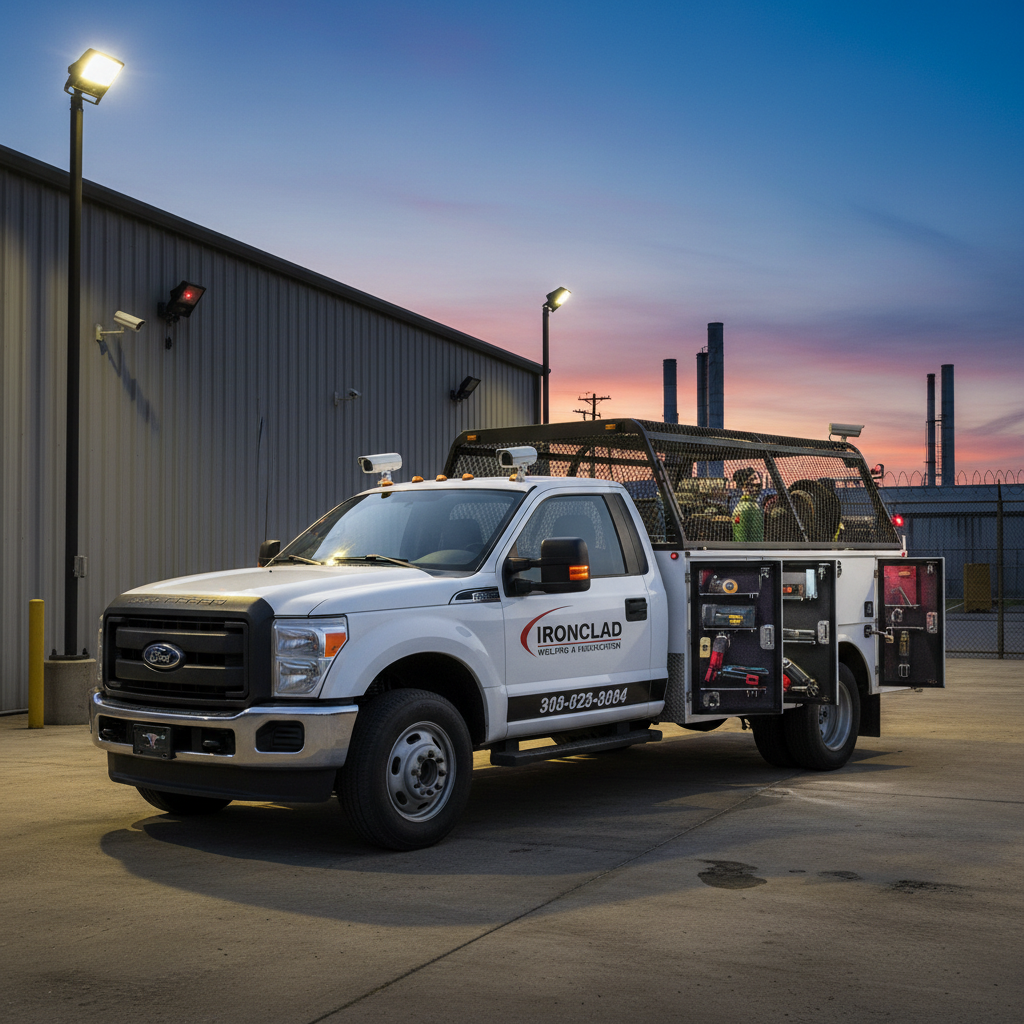
Internal Cage Systems: Weld your own security cage inside the bed. Enclose your welder, tool boxes, everything valuable. Lock it all behind steel mesh they can see but can’t reach.
False Floors: Hide expensive small items under custom false floors. Plasma cutters, expensive meters, anything that walks off easy. Out of sight, out of mind.
Electronic Security Systems for Mobile Operations
Technology’s finally catching up to our needs. GPS tracking, cameras, and alarms designed for mobile work.
GPS Tracking Solutions
Hidden Trackers: Multiple units in different locations. Engine bay, inside tool boxes, welded into the frame. If they find one, they won’t find them all.
Real-Time Alerts: Systems that ping your phone when the truck moves without authorization. Not just location tracking – motion detection, door opening, engine starting.
Equipment-Level Tracking: Tag your expensive portable gear separately. Hybrid battery-powered welders and plasma cutters should have their own trackers hidden inside.
Camera Systems
Dash cams work, but you need more coverage. 360-degree recording while parked. Motion-activated systems that store footage in the cloud, not locally where thieves can destroy it.
Solar-powered cameras for remote jobsites. Set them up watching your truck from a distance. Hidden trail cameras work great – hunters use them for months without maintenance.
Operational Security Practices
Best hardware in the world won’t help if your operational security sucks. Change these habits or lose your gear.
Parking and Positioning
Never Park the Same Spot: Routine makes you predictable. Vary your overnight locations, even if it’s just different spots in the same lot.
Back Into Spaces: Makes it harder to access your bed/work area. Forces thieves to work in more visible positions.
Park Near Activity: Late-night restaurants, 24-hour businesses, anywhere with foot traffic and lights. Thieves hate witnesses.
Tool Management
Don’t advertise what you carry. Tinted windows hide your interior setup. Keep expensive handheld tools out of sight when parked.
Consider leaving some lower-value tools visible as decoys. Old grinder, basic hand tools – stuff that looks valuable but won’t kill your budget to replace.
When setting up pricing for certification services or other specialized work, factor security time into your estimates. Those extra 10 minutes securing gear properly? That’s billable time.
Insurance and Documentation Strategies
Security’s about prevention, but you still need backup plans. Insurance won’t replace lost time or damaged relationships, but it’ll keep you in business.
Proper Documentation
Serial Numbers: Everything. Welders, grinders, meters, even expensive hand tools. Photos, receipts, registration records. Store copies off-site.
Equipment Photos: Before and after each job. Timestamp everything. Proves what you had when, helps with insurance claims and police reports.
Value Updates: Review your coverage annually. That field-ready battery welder you bought last year? Make sure it’s on your policy at replacement value, not what you paid.
Insurance Considerations
Standard auto policies don’t cover tools and equipment properly. You need commercial coverage that understands mobile operations.
Ask about security discounts. Some carriers reduce premiums for GPS tracking, alarm systems, secure parking arrangements. The savings might cover your security upgrades.
Building Security Into Your Business Model
Smart operators make security part of their service offering, not just an expense.
Secure Parking as a Service
Charge customers for secure overnight parking when doing multi-day jobs. Your truck stays safer, they get guaranteed service continuity. Win-win.
Partner with other contractors for shared secure storage. Split the cost of a fenced yard or storage facility. Stronger security than any individual setup.
Security-Conscious Scheduling
When planning your certification readiness calendar, consider security implications. Don’t schedule high-value jobs in high-risk areas back-to-back.
Build security time into job estimates. Those 15 minutes locking down properly? That’s not charity time – bill for it.
Advanced Protection Strategies
Once you’ve covered the basics, here’s where serious operators separate themselves from weekend warriors.
Decoy and Deterrent Systems
Dummy Cameras: Mix real and fake cameras. More visible deterrent for less money. Thieves can’t tell which ones actually work.
Security Signage: “Vehicle Protected by GPS Tracking,” “Contents Monitored by Video Surveillance.” Even if it’s not 100% true, it makes them think twice.
Alarm Stickers: Cheap deterrent. Stick them everywhere – doors, windows, tool boxes. Make your rig look like more trouble than it’s worth.
Network Security
Connect with other mobile welders in your area. Share information about thefts, suspicious activity, high-risk locations. Early warning systems work.
Join contractor groups and forums. When someone’s truck gets hit, everyone learns from it. Don’t repeat other people’s expensive mistakes.
Build relationships with local security guards, lot attendants, business owners where you park regularly. Extra eyes watching your gear.
Emergency Response Planning
Despite best efforts, shit happens. Have a plan for when your mobile welding security gets compromised.
Immediate Response
Contact List: Police, insurance, backup equipment sources, key customers who need immediate notification. Have it all programmed in your phone.
Backup Equipment: Relationships with rental companies, other welders who can loan gear, suppliers who’ll priority-ship replacements.
Job Continuity: Plans for keeping current projects moving while you rebuild. Customers won’t wait indefinitely.
Recovery Operations
Work with police, but don’t expect miracles. Your GPS tracking and documentation will do more than their investigation.
Monitor online marketplaces for your stolen gear. Thieves are lazy – they’ll list stuff with original serial numbers and manufacturer photos.
Network with pawn shops and used tool dealers. Not all receivers know they’re buying stolen goods. Build relationships that help recovery.
Cost-Benefit Analysis of Mobile Welding Security
Let’s be realistic about costs. Security isn’t free, but neither is replacing a $75,000 mobile setup.
Basic security – kill switches, better locks, tracking – runs $2,000 to $5,000. Comprehensive systems with cameras, alarms, and professional monitoring hit $8,000 to $12,000.
Compare that to your equipment replacement cost, insurance deductibles, and lost income during downtime. Most welders spend more on measuring equipment and precision tools than on protecting everything.
Factor security costs into your hourly rates. Spread it across all your customers – they’re all benefiting from your ability to show up with working equipment.
The Bottom Line on Mobile Welding Security
Your mobile rig represents years of investment and countless future opportunities. Protecting it isn’t paranoia – it’s basic business sense.
Start with physical security fundamentals. Add electronic systems as budget allows. Build operational security into daily habits. Document everything properly.
Most importantly, don’t postpone security planning until after you’ve been hit. By then you’re playing catch-up while hemorrhaging money and credibility.
Whether you’re running adaptive multimaterial welding jobs or basic repairs, your security foundation remains the same: make your rig harder to steal than the next guy’s.
Because there’s always another mobile welder who figured basic door locks were good enough. Don’t let that be you.